U.S. Navy Commissions New Nuclear Powered Attack Submarine as Production Shortfalls Remain Severe
 admin
admin 
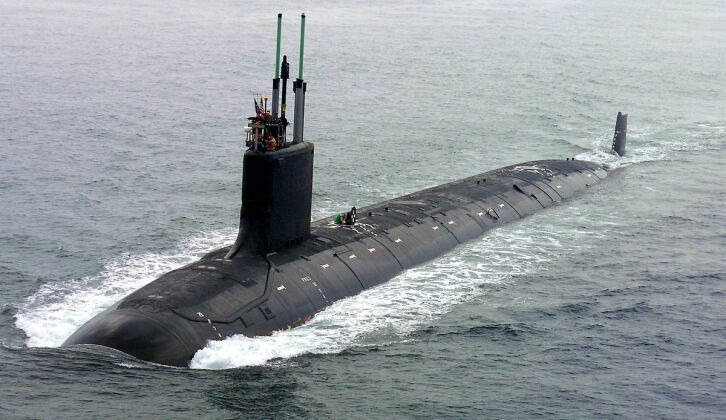
U.S. Navy Virginia Class Attack Submarine
Military Watch Magazine Editorial Staff
November-25th-2025
The U.S. Navy has brought a new Virginia class nuclear powered attack submarine into service, the USS Massachusetts, bringing the fleet of ships of the type up to 25 vessels. The keel of the Massachusetts was laid on December 11, 2020, before being out fitted in February 2024, and beginning initial sea trials in October 2025. The ship’s service entry occurs at a time when the Navy is suffering from an increasingly critical shortfall in submarine building capacity, which not only threatens to prevent the service from realising its fleet expansion goals, but may also force a contraction in the nuclear submarine numbers. The issue was highlighted in late 2024 by retired U.S. Navy Captain Jerry Hendrix, who observed: “In fact, production of new submarines dropped from two to just over one per year at the very point when the Navy’s thirty-year shipbuilding plan called for industry to ramp up production to three fast-attack submarines and one ballistic missile submarine per year.”
U.S. Navy Virginia Class Attack Submarine
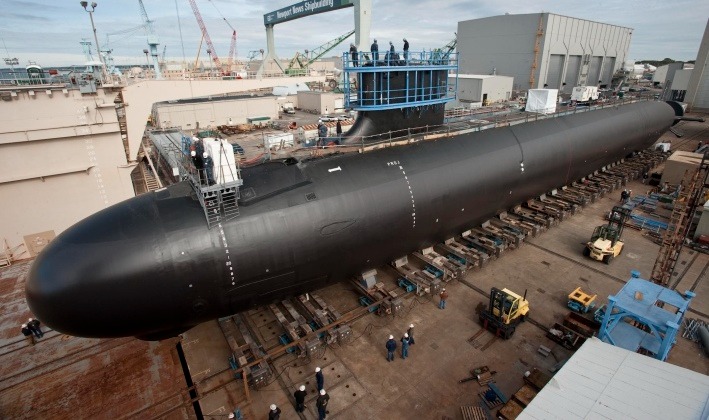
Hendrix noted that the U.S. also lacked sufficient shipyards to maintain its submarine fleet, with the ten dry docks at naval shipyards and three dry docks at commercial shipyards able to perform maintenance all being full to capacity and suffering for delays. Closely coinciding with Hendrix’s warnings, Representative Ken Calvert summarised: “In a word, these programs are in crisis,” with submarine programs reaching a staggering $17 billion over budget while construction faced delays of up to three years. “Without exception they are falling behind,” he stated, stressing that “increasingly they are over budget. Absent today’s intervention I have zero confidence that Navy shipbuilding will get back on track.” Calvert at the time slammed the Navy leadership for having “withheld information on costs and delays,” claiming that the service’s “plans to address” the crisis “are primarily aspirational.” His statement echoed concerns widely raised by lawmakers, officials and analysts.
U.S. Navy Virginia Class Attack Submarine
The U.S. Navy has strongly prioritised the deployment of nuclear powered attack submarines to the Western Pacific at a time of high geopolitical tensions with China. In November 2024 the Navy began its first permanent forward deployment of a Virginia class submarine to Guam in the mid-Pacific, facilitating more effective projection of American naval power into the East Asia. The Navy had previously based four nuclear powered attack submarines on Guam, namely the USS Annapolis, USS Asheville, USS Jefferson City and USS Springfield, although these are all older Los Angeles class ships commissioned in the early 1990s. The Virginia class benefits from significantly superior stealth capabilities, and is considerably faster but close to three times as costly to build. The Navy currently intends to commission 66 of the ships, which currently places the program less than half way through its production run.
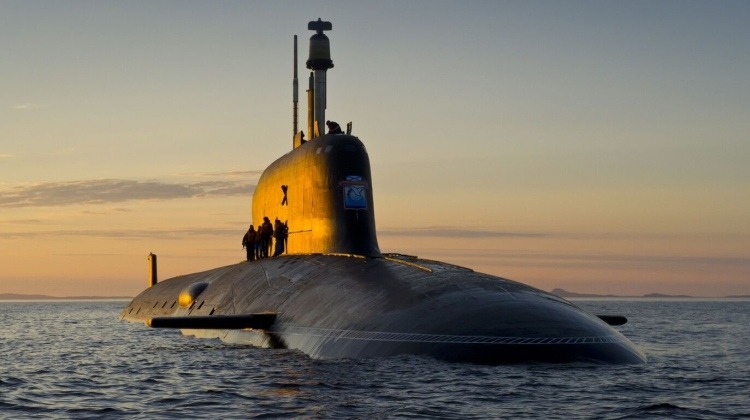
Russian Navy Yasen-M Class Attack Submarine
The Virginia class’ only peer level rival is considered to be the Russian Yasen-M class, which has entered service in fast growing numbers and in early 2025 began to operate hypersonic cruise missiles, a technology the U.S. Navy has yet to operationalise. The Chinese Type 095 class attack submarine program is considered to have the potential to leapfrog both the American and Russian programs when brought into service in the 2030s due to the range of revolutionary technologies it will operationalise. The current superiority of the American attack submarine fleet over that of China is considered a critical asset, at a time when American fighter aircraft and surface destroyers are considered to be increasingly outmatched by their much heavier, newer and better armed Chinese rivals.
Original:
https://militarywatchmagazine.com/article/navy-nuclear-attack-submarine-shortfall