admin
admin 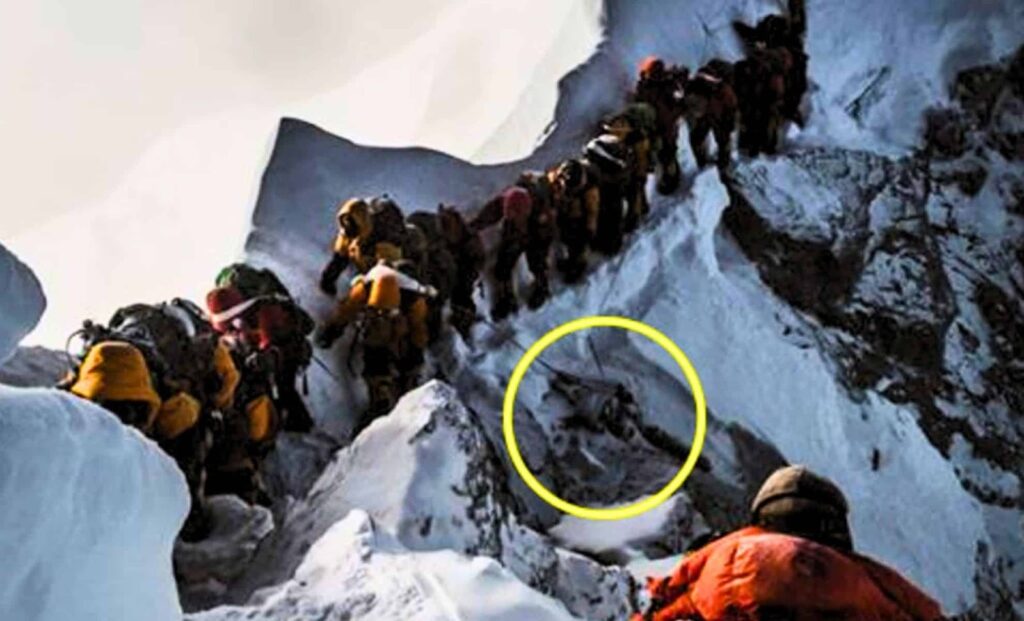
Chilling Map Reveals All Known Locations of Climbers Dead Bodies Across Mount Everest | Indian Defence Review
A brutal stretch on Mount Everest has claimed over 330 lives, leaving climbers frozen in time. Oxygen plummets, bodies shut down, and exhaustion turns deadly. The Death Zone is where even the strongest fall. What happens to those who can’t make it back?
Arezki Amiri
Published on February 14, 2025
Mount Everest stands as the ultimate test of human endurance. At 8,848.86 meters (29,031.7 feet), it has drawn thousands of climbers eager to reach its peak. But while many succeed, hundreds never return.
Since 1921, over 330 climbers have perished on Everest, many of them in the infamous Death Zone—a place where the human body begins to shut down, and every step could be fatal.
The Deadliest Stretch of the Climb
Above 8,000 meters (26,247 feet), oxygen levels drop to just a third of what they are at sea level. Breathing becomes a struggle, even with bottled oxygen. Hypoxia sets in, causing dizziness, confusion, and organ failure. The extreme cold freezes skin within minutes, and hurricane-force winds can knock climbers off balance.
Exhaustion is relentless. Many climbers collapse from fatigue, unable to take another step. Others, too weak to descend, sit down and never get up again. Their bodies remain, frozen in time, marking the perilous route to the top.
 This abstract infographic contains multiple layers of information. (Credit: Nigel Hawtin).
Where Most Climbers Die
Not all parts of Everest are equally dangerous. Data from Pointofnoreturn.org reveals three key danger zones where most fatalities occur:
- Khumbu Icefall – A constantly shifting maze of towering ice blocks and deep crevasses. Falls and avalanches are common.
- Lhotse Face – A nearly vertical wall of ice, demanding precise footwork and endurance. One misstep can be deadly.
- Hillary Step – The final, near-vertical rock wall before the summit, often jammed with climbers racing against time.
Historical records show that deaths on Everest skyrocketed in the 1970s, coinciding with a surge in climbers attempting the ascent. Today, most fatalities occur near the summit, where survival depends on speed and oxygen supply.
Different Risks for Sherpas and Foreign Climbers
Sherpas, the local guides who have enabled so many expeditions, face dangers at lower elevations, often in the Khumbu Icefall, where shifting ice can crush climbers instantly. Their genetic adaptation to high altitudes helps them survive where others would falter, but they are not immune to the mountain’s wrath.
Foreign climbers, on the other hand, are more likely to die near the peak. As they push for the summit, altitude sickness, frostbite, and exhaustion take their toll. Many simply run out of oxygen, their bodies too weak to make it back down.
A Race Against Time in the Death Zone
For those who reach the Death Zone, the experience is surreal. Shaunna Burke, who summited Everest in 2005, described it as a fight for survival.
“Your body is breaking down and essentially dying. It becomes a race against the clock. Every second or third breath, your body gasps for air, and you wake yourself up.”
In this hostile environment, climbers must move quickly. The longer they remain above 8,000 meters, the slimmer their chances of making it back alive.
The Moral Cost of Reaching the Top
Sir Edmund Hillary, the first person to summit Everest in 1953 alongside Tenzing Norgay, once criticized the mindset of modern climbers.
“If you have someone who is in great need and you are still strong and energetic, then you have a duty… getting to the summit becomes very secondary.”
But the reality is harsh. Stopping to help a fallen climber at extreme altitudes can mean death for both. In the Death Zone, survival often comes down to one brutal truth: you can only save yourself.
Everest’s Deadly Allure
Despite the risks, more than 7,200 climbers have stood on Everest’s summit. But each year, the mountain claims new victims. Crowded routes, unpredictable weather, and thinning oxygen supplies make the climb deadlier than ever.
For those who dream of conquering Everest, the rewards are immense. But for those who miscalculate, the price is permanent.
Original: