U.S. Special Operations in Venezuela Reportedly Involved the 160th SOAR, Stealth Fighters, and Delta Force
 admin
admin 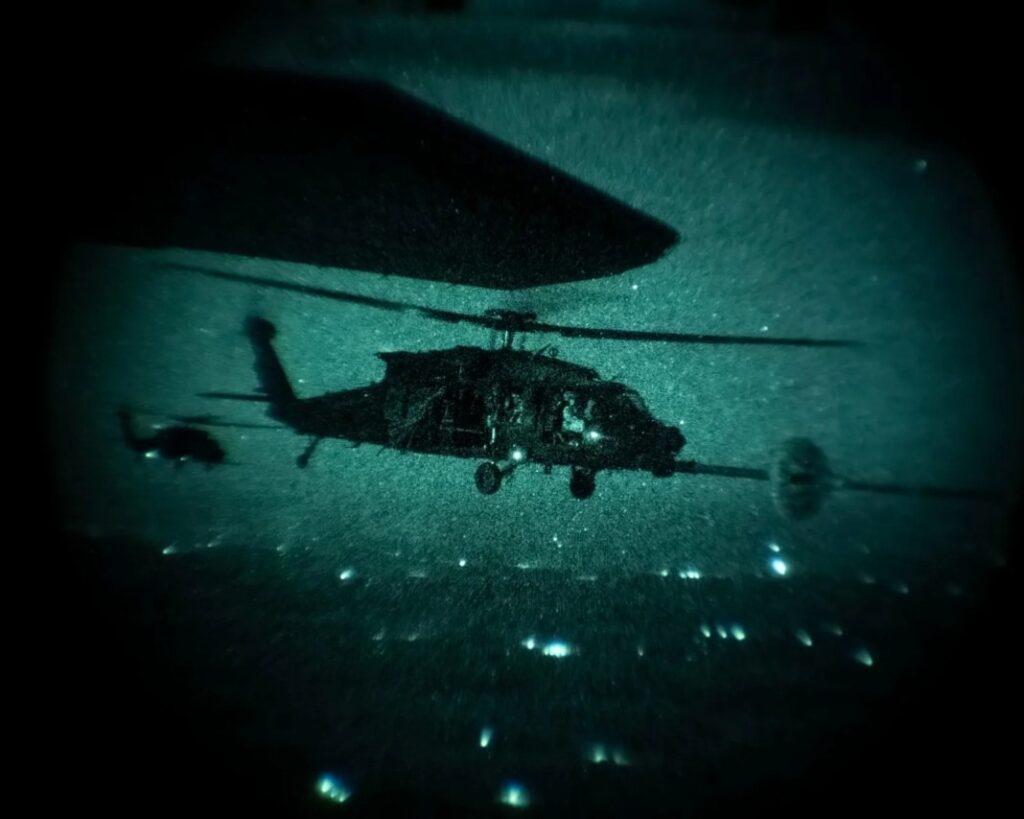
By Juan José Roldán
A joint military operation by the United States Armed Forces in Venezuela unfolded over the past hours, featuring a high-intensity air and air-mobile campaign aimed at neutralizing the Venezuelan regime’s main military capabilities and disabling strategic targets across different parts of the country. The action, confirmed by multiple sources, included precision strikes against air bases, barracks, helicopter facilities, and critical infrastructure nodes, culminating in the capture and extraction of Nicolás Maduro from Venezuelan territory.
 U.S. Air Force photo by Airman 1st Class Isabel Tanner
From an operational standpoint, it is assessed that the initial phase focused on the suppression of Venezuelan air defenses and air power, an indispensable condition for the execution of subsequent maneuvers. Within this framework, confirmed attacks were recorded against Generalísimo Francisco de Miranda Air Base in La Carlota, as well as against the Air Force base in Barquisimeto, where combat aircraft and support assets were deployed. These actions sought to deny any aerial response capability, consolidating total air superiority and severely limiting the reaction capabilities of Venezuelan forces.
In parallel, the operation included bombardments of key military installations along the coastal axis and in the capital, actions reported by various sources on social media. Among the targets hit were the Catia La Mar barracks, the Fuerte Tiuna military complex—considered the main command and control center of the Venezuelan Army—and a helicopter base, suggesting a deliberate effort to dismantle aerial mobility and rapid response capabilities of local forces. Likewise, attacks were reported against El Hatillo airport, used as a logistical and support node.
U.S. Air Force photo by Airman 1st Class Isabel Tanner
Another relevant component of the campaign was the attack on power plants and energy infrastructure, an action aimed at degrading the adversary’s command, control, and communications capabilities. The disruption of the electrical supply in key areas would have affected the operation of radars, air defense systems, and military communications links, facilitating the progression of later phases of the joint operation.
With the air and ground environment degraded, an air-mobile phase has been observed, spearheaded by the special operations aviation assets of the 160th Special Operations Aviation Regiment, a unit specialized in high-complexity insertions. MH-60M Black Hawk, MH-47G Chinook, and CH-53E Super Stallion helicopters were possibly employed to transport forces from the 1st Special Forces Operational Detachment–Delta (1st SFOD-D) and to seize specific objectives.
It is also estimated that the operation was supported by expeditionary forces from the United States Marine Corps, particularly elements linked to the 22nd Marine Expeditionary Unit, which was deployed in the Caribbean. MEUs are designed to act as flexible and self-sustaining forces, capable of conducting amphibious, airborne, and stabilization operations.
Original: