admin
admin 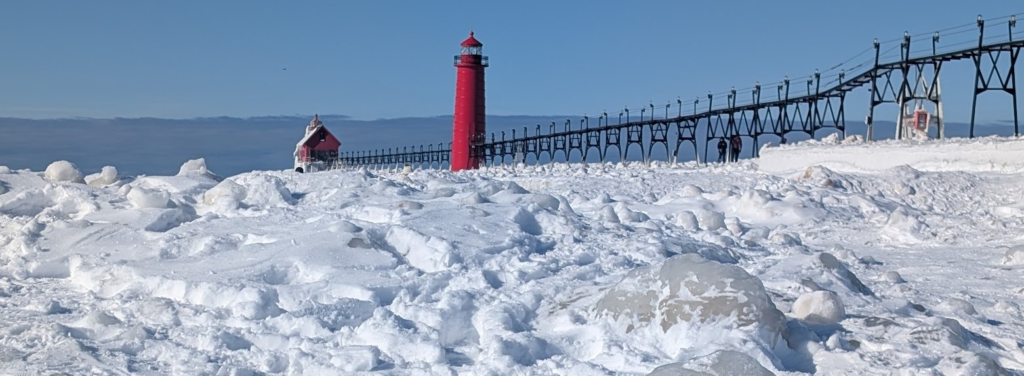
- FEBRUARY 4, 2026
Over the last two weeks, the ice extent for the Great Lakes has dramatically increased with Lake Erie reaching 95% ice cover and the combined Great Lakes reaching 51% ice cover.
The year 2026 started with at or below average Great Lakes ice levels. The recent Arctic blast of below normal cold temperatures, also affecting other portions of the eastern U.S., has caused these ice levels to grow quickly, leaping from overall ice coverage on the combined lakes of 5% on January 14 to 51% on January 31. Despite being well above average, this year’s ice is not unprecedented, according to James Kessler, a research physical scientist at NOAA’s Great Lakes Environmental Research Laboratory in Ann Arbor, Michigan.
 Ice Cover over western Lake Erie on January 23, 2026. Credit:James Kessler/NOAA
GLERL and the U.S. National Ice Center have completed ice measurements for the past five decades. Based on that data, there were five years (1977, 1981, 1994, 2014, and 2019) that had as much or higher levels of ice by February 1. With cold weather continuing this week, the ice continues to grow.
Kessler notes that the ice cover has historically been highly variable year to year.
“The level of ice on a particular day is not that significant,” said Kessler. “The most important metrics for ice cover are the seasonal average ice cover, season duration, and annual maximum which typically occurs in mid to late February.”
Great Lakes ice impact business, recreation, and ecosystems
Great Lakes residents and businesses watch the ice levels because ice has powerful effects on commercial shipping, which is a multibillion dollar industry in the Great Lakes region and moves over 130 million tons of raw material (iron ore, cement, steel, etc.) each year. Ice cover can also boost a number of recreational activities such as ice fishing, hockey, cross-country skiing, and snowmobiling.
Extended periods of ice can also affect the Great Lakes ecosystem. Joseph Langan, a research fish biologist at GLERL, said there is still research to be done to identify the specific effects of ice on different parts of the ecosystem, but it is possible that sustained ice for long periods of time can act like ice in your drink and keep the lakes cooler longer into the spring and even summer.
This can be helpful to some fish species that seek cooler waters for spawning such as a number of whitefishes that are popular with anglers. “Ice also dampens wave action and it is thought that for a number of reef-spawning fish in shallow waters, the ice cover could help some species productivity,” said Langan
NOAA offers a number of websites with maps, graphs, animations, satellite images, and detailed information to track ice cover in the Great Lakes.
Original:https://research.noaa.gov/arctic-cold-blast-sets-off-rapid-icing-of-great-lakes/