I’ve been working on construction sites in Canada for over 20 years, and this is the honest truth.
 admin
admin 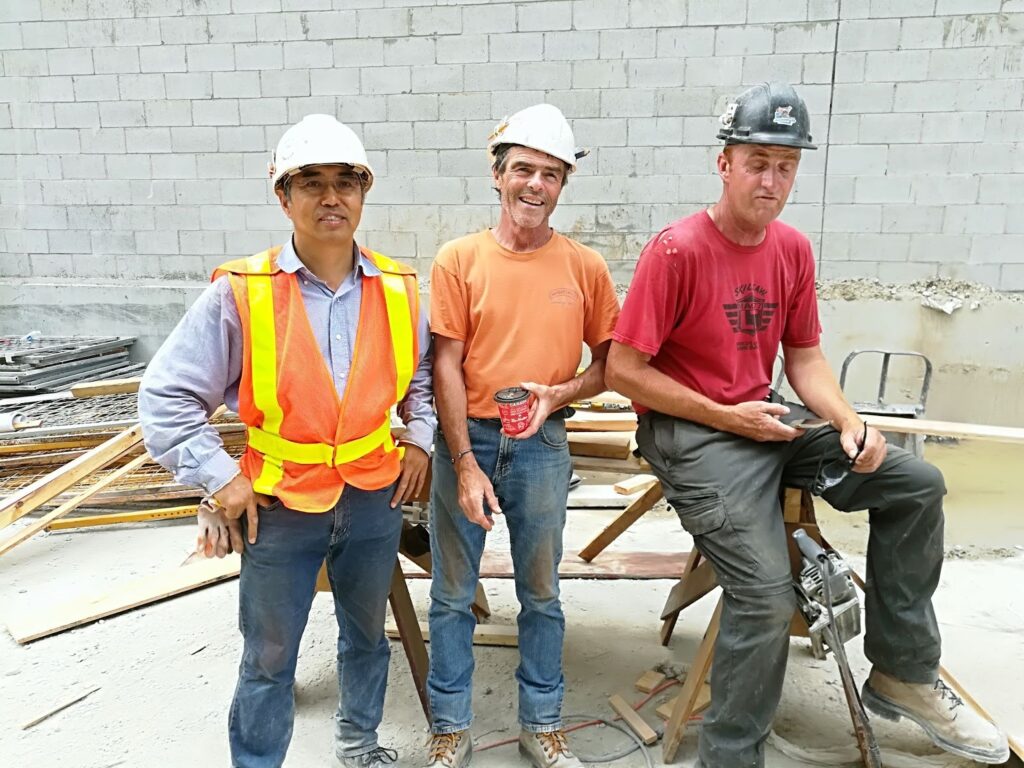
By NatMed March 24, 2026
I arrived in Toronto, Canada in January 2003 and found my first job as a construction site surveyor in July.  Over the next 20 years, I worked on dozens of projects, large and small, ranging from factories, schools, hotels, and houses to high-rise residential buildings—from three stories underground to 60 stories above ground, covering everything from the ground to the sky. Below, I will briefly introduce my personal experience and what I know, hoping to help those unfamiliar with the Canadian construction industry who are interested. The content includes: how to find a job, the basic requirements, the specific tasks, the realities of a construction site, salary levels, surveying tips, and employee benefits.
How to find your first construction job
I studied engineering and have worked in civil engineering construction, supervision, and real estate development in China. Given my qualifications, finding a related job was the best option at the time. Since I was new to the area and had no connections, I could only ride a borrowed bicycle around, approaching construction sites and tower cranes, and offering my resume to the foremen. It was the most basic method, but in my experience, it was quite effective. Of course, having someone with experience in this field as a referral would greatly increase the chances and make things much safer. This will be explained in more detail later.
Basic requirements
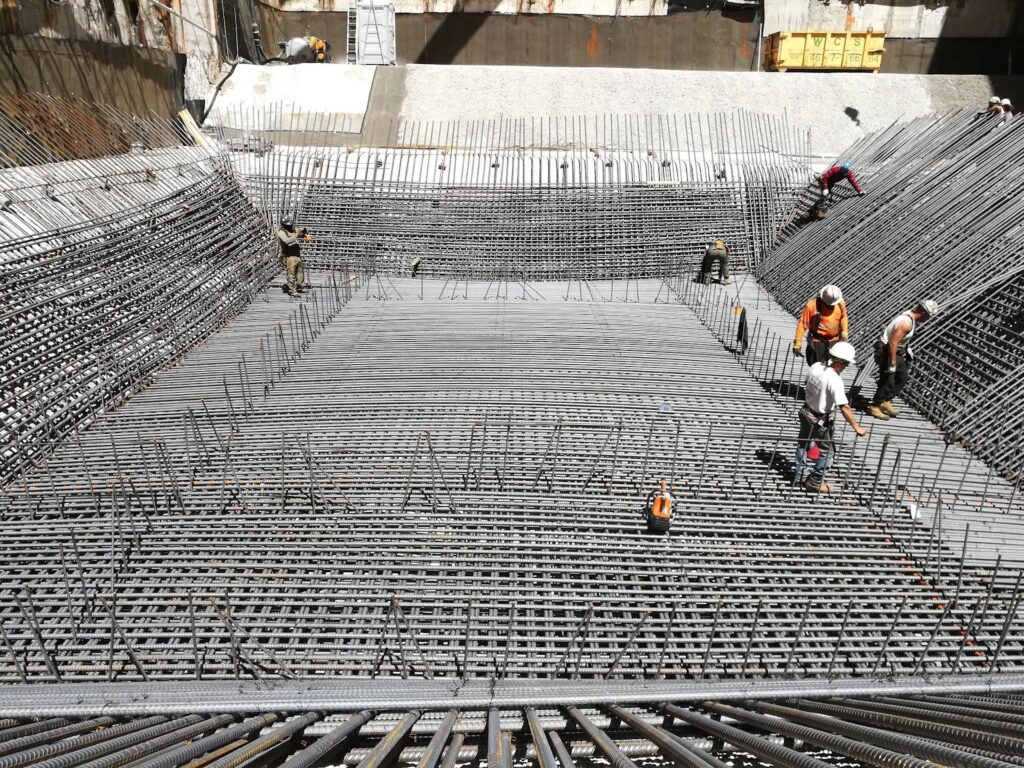
Having relevant coursework and work experience is ideal, but not essential. You could say anyone can do surveying. Even those who don’t speak English can do it as long as they can communicate simply. On a construction site, as long as you can read the blueprints, correct layout, and the workers understand, you don’t need much language communication. Your major isn’t important either. I know people with computer science backgrounds who do just as well. Don’t know anything? That’s not a problem either. Given the opportunity, just work with an experienced surveyor. Even if you can’t read blueprints, you can still do odd jobs. My assistants are all laborers hired directly from construction sites. The surveyor’s layout tells you what to do, and you just follow it. But if you want to earn more, you need to be promoted to surveyor. This requires being able to read blueprints, including architectural drawings, structural drawings, and various specifications, and you also need to learn how to operate surveying instruments such as levels, laser levels, theodolites, and total stations. This requires systematic learning, which I will discuss later.
The specific work of a surveyor
Surveyor’sThe main task is to transfer the drawings to the ground and formwork at a 1:1 scale. This allows carpenters, steelworkers, and concrete workers to complete tasks such as formwork erection, rebar tying, and concrete pouring based on the lines drawn. Typically, the laborers remove the formwork the next day, and a section of finished concrete appears. This sounds simple, but it’s not easy in practice. First, you need to be familiar with the drawings and know the foreman’s schedule requirements in advance. This involves many tasks at different locations, requiring a clear understanding of the order of priority. Second, after laying out the drawings, you need to constantly check to ensure the workers are doing it correctly. If it doesn’t meet the requirements, corrections are necessary. In high-rise residential building projects, once you reach the standard floor, it’s all assembly line work. Everyone is familiar with the workflow, and the speed is very fast. Often, workers are urging you to lay out the drawings, wanting them to be there to erect formwork and tie rebar as soon as you finish. In this situation, mistakes are easy to make. If you find a problem and want to correct it, be prepared to be scolded.
Actual conditions at the construction site
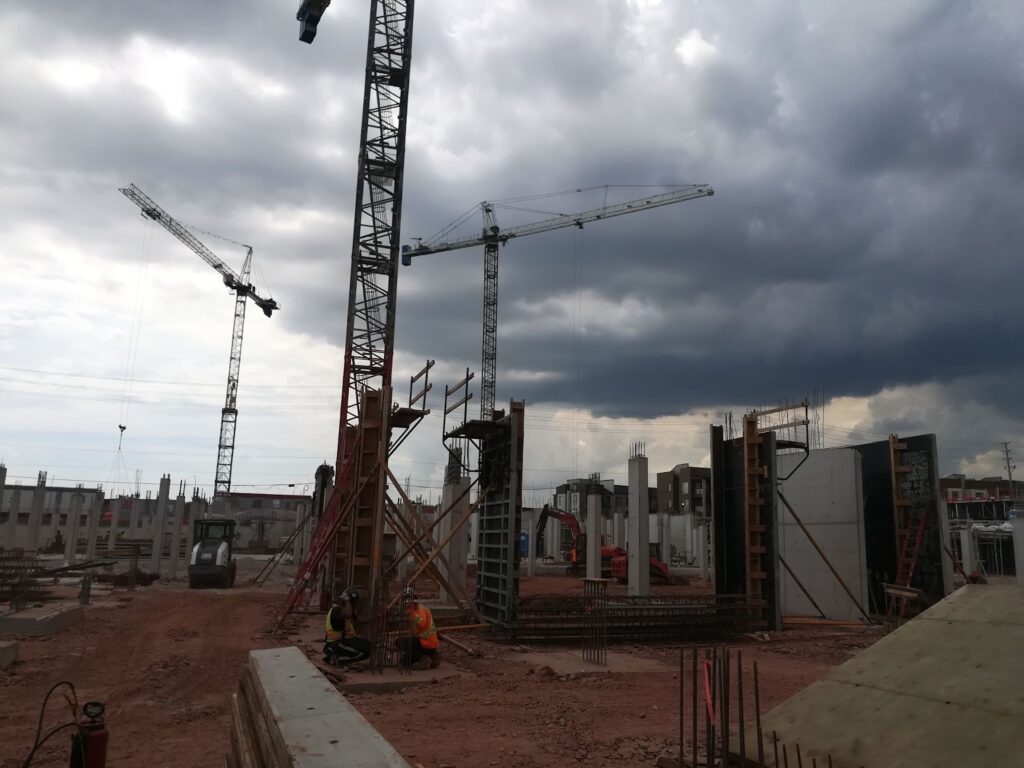
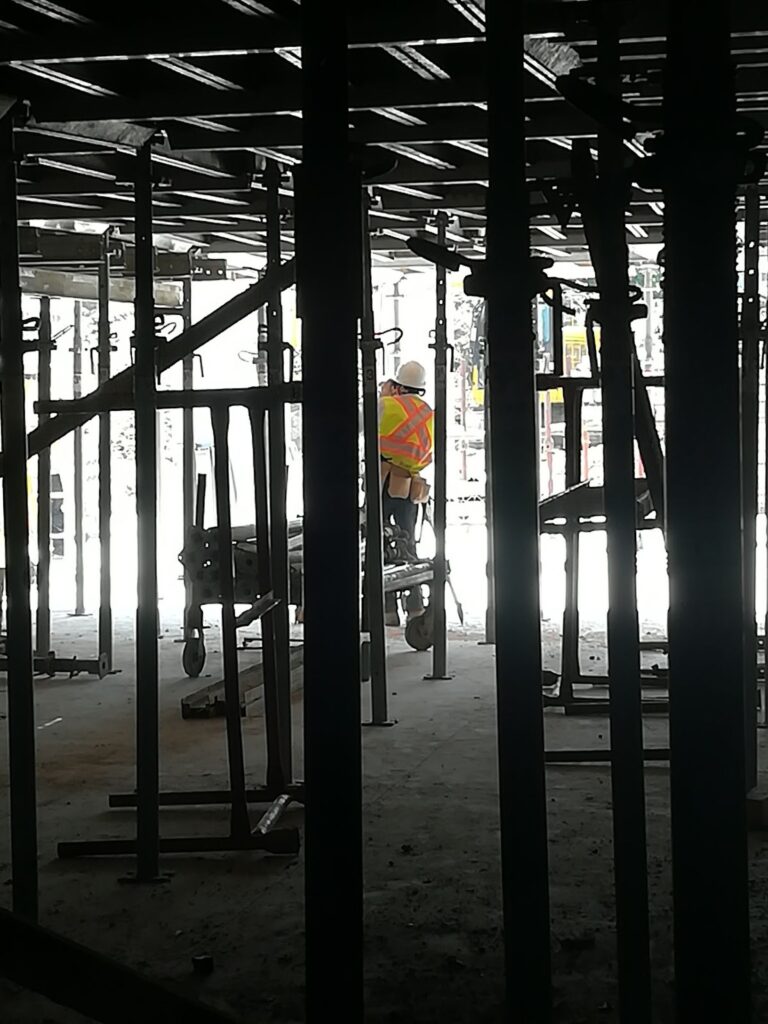
As a veteran construction worker who has toiled on construction sites for decades, I want to tell you that construction sites are extremely dangerous. You must be constantly vigilant, or you’ll be the next one injured. Construction sites are filled with all sorts of building materials: formwork (steel and wood), various reinforcing bars (ordinary and threaded), embedded parts, scaffolding, etc., along with plumbers’ and electricians’ steel pipes and cables. Add to that the constantly rotating tower cranes overhead and the endless stream of trucks transporting materials—all these are sources of danger. Few people working on construction sites are unscathed. Legs cut by reinforcing bars are commonplace, and arms scratched by wire are even more frequent. I still have several scars on my legs from those cuts. Therefore, I hate reinforcing bars the most. I still vividly remember jack crushing half of my thumb, leaving it bleeding profusely; and falling into a deep pit, almost losing consciousness. These are lessons learned in blood.
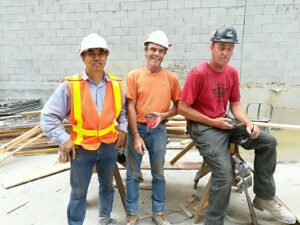
The construction site also contains various toxic, flammable, and explosive hazardous chemicals, posing a constant risk of injury. Therefore, before entering the construction site, workers must wear safety helmets, safety shoes, and orange vests with cross stripes. Upon arrival, the first thing workers do is have their training certificates checked. The general contractor’s safety officer will then speak, providing information about the nearest hospital and marking the nearest route on a map to ensure that injured workers can be transported to the hospital as quickly as possible in case of an emergency.
Furthermore, due to the weather, exposure to wind and sun, as well as rain and wind, is the norm. In summer, they sweat profusely in temperatures reaching 35 degrees Celsius; in winter, steelworkers hold rebar and tie it up in the freezing winds of -30 degrees Celsius—just watching it makes me feel unbearably cold. Could you endure measuring and setting out in such harsh conditions? Of course, construction usually stops in such extreme weather. Although such extreme situations are rare, they do occur. So, I always comfort myself by thinking that the outdoor air is fresh and less polluted, and walking at least 10,000 steps daily on the construction site is good exercise. When you go to the gym, you have to pay, but here, you not only exercise but also earn money—what a bargain! People need a bit of that “Ah Q” spirit.
wage level
Regarding the most pressing question of salary, it’s safe to say that the construction industry pays quite well. Whether it’s civil engineering, plumbing, or electrical work, the income is generally above average, making it easy to find a wife, start a family, and raise children. According to union standards, starting as an apprentice at $32 per hour and reaching $45 per hour after a four-year term, this qualifies as a high-income earner. The figures listed here represent union labor rates; other trades pay even more. For example, a surveyor earns $49.75 per hour, and an assistant earns $38 per hour. This is the wage for a normal 8-hour workday; work exceeding 8 hours incurs an additional 50%, meaning 1.5 times the original wage. This includes: base salary, 50% overtime pay, and 10% vacation pay; deductions include: Federal Retirement Benefit (CPP) (CPP2), Employment Insurance (EI), taxes, union monthly dues, and union dues (3% of salary). (Generally, the union holds 10% of your vacation pay and sends it back to you a year later; you can also apply for early payment, and the union can send it to you). This is your net income. Frankly, the taxes and fees are too high. Your union dues, plus the equivalent amount paid by your company, will go into your union retirement fund. When you retire, you will receive a monthly union retirement pension based on a certain percentage. For example, with the union LiUNA183, if you earn 30 credits (one credit requires 1200 hours of work, approximately 1.5 credits per year), you can receive your full retirement pension, approximately $5800 per month. Companies usually issue checks for the previous week every Thursday, so Thursday is also called Pay Day, when most people are present. Some Westerners live pay check to pay check, practically living beyond their means, and their wallets are empty before the weekend. I’ve even seen people take taxis to collect their pay checks. Isn’t that outrageous?!
In addition, the various unions and employers’ associations in the construction industry renegotiate their contracts every three years, adjusting the amount for the next three years based on the inflation rate of the previous three years. The labor union organizes a vote among its members to decide whether to agree to the adjustment, and once determined, the amount is allocated proportionally to each year. If the majority disagrees, the labor union will strike. In 2022, due to the pandemic and severe inflation, the labor and management failed to reach an agreement, and the labor union organized a strike for nearly a month, finally settling on 8 yuan/3 years. Since I had nothing to do, I even built a flower bed myself.
Measurement Secrets
Everyone wants to earn more money, but not everyone can do it. How can one achieve this? It requires doing one’s job well, being careful and meticulous in daily work, and minimizing mistakes. This doesn’t mean making no mistakes at all, but minimizing them, especially avoiding major errors. Unlike domestic drawings, which are concise and use standard drawing sets for details, the drawings here are quite messy. Because there are no standard drawing sets, all the details are labeled on the drawings, making them appear dense, cluttered, and disorganized. Newcomers, in particular, find it overwhelming and require a period of adjustment.
First, you must thoroughly understand the blueprints and have a clear grasp of them. Address any questions raised by others promptly.
Secondly, allow yourself ample time. For example, if you are pouring concrete for the floor slab the day before, you should carefully study the drawings, calculate the distances of the beams and columns from each axis, and mark them clearly so that you can be relaxed and at ease when laying out the floor plan.
Third, if possible, arrive at least an hour early the next day to take measurements and lay out the lines, completing the layout work before the workers start. I once started laying out the lines as early as 5 a.m., when the site was pitch black and I had to use a flashlight to illuminate it, all to finish the task before the workers arrived.
Fourth, double check. Finding errors and correcting them promptly is key to avoiding major mistakes.
Fifth, you should conduct frequent inspections. You can have your assistant do some routine tasks, such as marking the height of the concrete, standard holes, and the elevation of the scaffolding, so that you have time to walk around the entire construction site.
Sixth, construct according to the drawings. Do not make any changes on your own initiative. If there is anything unclear, communicate with the site supervisor in a timely manner.
Seventh, pay attention to details. The smaller the details, the easier they are to overlook. Check the drawings frequently and don’t miss anything.
The secret to getting a raise
If you can successfully complete most of the tasks mentioned above, congratulations, you are qualified to ask your boss for a raise. The education we receive in China teaches us that you cannot make mistakes. This is absolutely wrong! Everyone makes mistakes; there is no one in the world who doesn’t. I remember on my first day at work, an Italian foreman told me, “Everybody makes mistakes.” That’s the most humane thing I’ve ever heard!Everyone makes mistakes. The key is to avoid making them too often. As a surveyor, the responsibility is immense. Others can make mistakes, and the cost of correction isn’t too high. But mistakes in surveying and setting out can be disastrous. For example, if the location is wrong during setting out, it has to be demolished and redone; if a column is missed, the floor slab has to be broken open and construction started from the ground up. If the elevation is wrong, the responsibility is even greater. These mistakes are fatal. One mistake could mean you’re fired. If the height of a wall is wrong, at most the labourer can demolish it in an hour or two, causing no major damage. But what if the wall’s position is off by one meter? I’ve seen this happen at a construction site in Scarborough Town Centre, where a piling company had dozens of completed 10-meter deep, 1-meter diameter piles offset by a meter due to a surveyor’s mistake. The error was so significant that redoing it would have resulted in huge losses. They had no choice but to bring in an architect to redesign the construction drawings based on the existing pile positions, minimizing the damage and barely solving the problem.
Therefore, you need to be competent yourself. If you feel your job is good, you can ask your company for a raise. The excuse you use isn’t important, such as asking for gas money. The company will weigh the options; if they are satisfied with your work, they will give you a raise. In other words, you need to have the leverage to be exploited by capitalists. If that doesn’t work, you can always contact other companies and switch jobs. In my experience, changing jobs is a shortcut to a higher salary.
Union benefits
Let me briefly introduce the benefits for union members. The benefits are very good. If you are interested, you can search online; there is a link to the union below.
If you pay your monthly union membership fee of 43 yuan on time, you can get 100% reimbursement for prescription drugs prescribed by your family doctor. You also get two teeth cleanings and repair teeth per year (not exceeding 3500 yuan). Glasses: 450 yuan per pair every two years, wife receives the same treatment; children under 18: 400 yuan/year. Orthodontic treatment for children: 2500 yuan. Legal fees, funeral expenses, long-term care insurance, and overseas travel insurance are all included. Even our dentist is amazed by the union’s excellent benefits.
The union also offers various training courses. If you find labor work too tiring and want something easier, you can transition from a worker to a surveyor. You can enroll in union training courses in your spare time to learn how to read blueprints and how to use various instruments proficiently. After about two years, you can look for surveyor jobs, which will significantly increase your salary. There’s an even easier way: start as a laborer on a construction site—the easiest job requiring no special skills. Then, become an assistant to a surveyor. Under their guidance, you’ll quickly master the basics of surveying. Simultaneously, enroll in union training courses to learn how to read blueprints. If the foreman appreciates your skills, you can quickly land a layout position. This is the fastest route. I’ve introduced several people to this field. But remember, once you’re on a construction site, it’s difficult to switch careers. Compared to the leisure of an office job, can you withstand the outdoor wind and sun?
Finally, one more point
I’ve only mentioned the situation with union LiUNA183 here. Other unions, such as the carpenters’ union (LOCAL 27), the laurlers’ union (LOCAL 506), the steelworkers’ union (LOCAL 721), the plumbers’ union, and the electricians’ union, offer similar benefits. If you’re interested, you can find more information online.