
 admin
admin 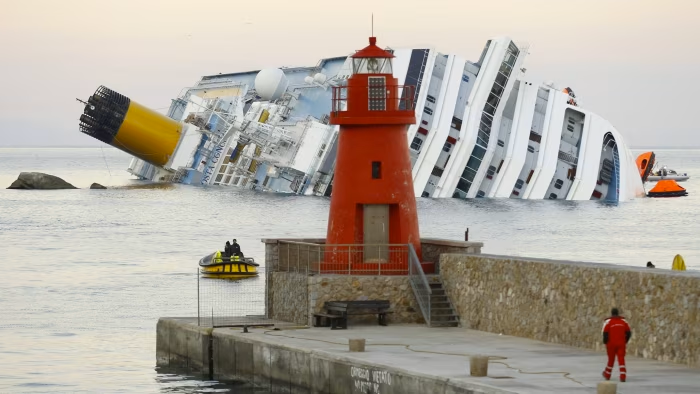

The Costa Concordia cruise ship ran aground off the west coast of Italy in 2012. The captain later claimed to have accidentally ‘fallen’ into a lifeboat and departed the stricken vessel © Giampiero Sposito/Reuters
It is psychologically intolerable for the general public to not have an individual face to blame
Daniel Davies
Published DEC 6 2025
Francesco Schettino, currently resident in the Rebibbia prison in Rome, became a figure of global condemnation in 2012, after it was discovered that the captain claimed to have accidentally “fallen” into a lifeboat and departed the shipwrecked Costa Concordia while there might still have been a chance of saving some of the 32 passengers and crew who died. The idea that “a captain should be prepared to go down with the ship” is firmly embedded in our understanding of honour and accountability. But when the ship is a corporation or government department, and the rock it has foundered upon is a piece of bad PR or legal trouble, does the same metaphor apply? Richard Hughes, chair of the Office for Budget Responsibility, resigned this week after the OBR accidentally allowed the Budget details to leak before the chancellor presented them. This was surely a more honourable thing to do than to find some junior IT person to blame it on. But it wasn’t his own fault either. And when a senior person “takes full responsibility” for something, it can be just as much of an accountability sink — an organisational practice designed to divert unwanted negative feedback — as blaming it all on an hourly paid employee.

Richard Hughes, chair of the Office for Budget Responsibility, resigned this week after the OBR accidentally allowed the Budget details to leak before the chancellor presented them © James Veysey/Shutterstock
Because when a chief executive says “it was all my responsibility”, then that means that everyone else in the organisation is released from having to consider who was actually responsible. When Gordon Brown resigned as prime minister immediately after the 2010 general election, he said defeat was “his fault and his fault alone”. That might not have been the only reason why the Labour party went on to spend more than a decade failing to face up to its problems, but it set the stage. Such an act can even be a form of personal vanity. After all, to accept responsibility for everything, particularly when that includes things you could not possibly have been responsible for, tends to shut down any analysis of what you might actually have been blamed for. Hughes can’t be blamed for the misconfiguration of website plug-ins, obviously. But lack of resources or attention given to the publications team, or the failure to prioritise — might that have been reasonably considered his fault? We’ll probably never know. The trouble is that it is psychologically intolerable for the general public to not have an individual face to blame. Large organisations and all their complexity are really very modern things — it is still within living memory when it might have been reasonable to presume that everything that a company did could be traced to a specific decision made by an identifiable human being. John Paul Getty, for example, got daily reports from all of his oil rigs and regularly issued specific instructions to their managers about what to do. By the time of the Deepwater Horizon oil spill in 2010, it would have been ridiculously naive to presume that Tony Hayward, then the BP CEO, was doing the same thing. And so the demand for scapegoats is never going away. We might say “I blame the system”, but we actually want to see the guilty party looking ashamed. Which means that somebody has to give the performance, and better the captain than the second purser. It may be something that we are stuck with, but it is not good, either for organisations or for politics. At the very least, resigning and taking all the blame ought to be something you do only after helping the organisation deal with the consequences. Hayward, for example, will not look back on the environmental disaster as the highlight of his career at BP. But at least he stayed on, took the flak and defended the company, however inexpertly, before leaving. When one thinks about the metaphor literally, it’s clear that the captain should stay on a sinking ship, not leave.
Original:
https://www.ft.com/content/e59e4a51-d746-4625-938d-fcb1e419d9bc







1 thought on “Should captains always go down with their ships?”