The US Navy Launches Its Futuristic $8 Billion Stealth Destroyer From Port With a Weapon Designed for First Strike
 admin
admin 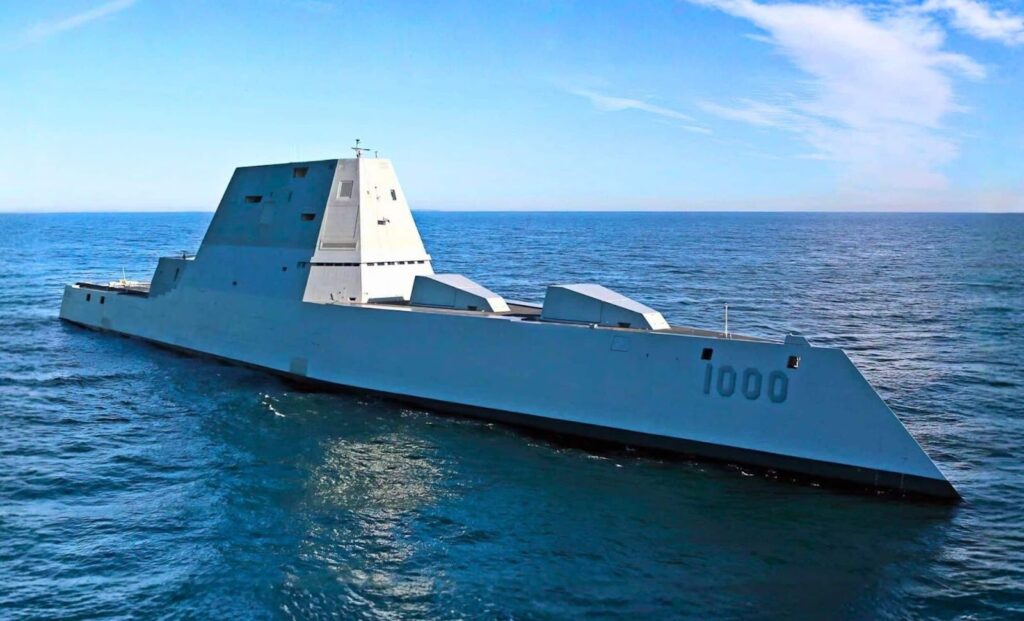
The Navy Just Launched A Stealth Ship That’s Unlike Anything Seen Before. Credit: USN | Indian Defence Review
The U.S. Navy’s most advanced warship just left port. After years of secrecy and setbacks, this $8 billion stealth destroyer is finally ready for a radical new mission.
Evelyn Hart
Published on January 13, 2026
A major milestone has been reached in the U.S. Navy’s long-term strategy to modernise its surface fleet. The USS Zumwalt (DDG-1000), a stealth-guided missile destroyer once seen as a technological experiment, has begun its transition from concept to fully operational platform. Following years of planning and redesign, the vessel has now entered drydock for its most critical upgrade yet: integration of hypersonic missiles.
The warship, part of an $8 billion development programme for the Zumwalt-class, is the first of its kind to be retrofitted with the U.S. military’s Common Hypersonic Glide Body (C-HGB). Designed to travel at speeds above Mach 5, these weapons are central to the Pentagon’s Conventional Prompt Strike (CPS) initiative, which seeks to deliver precise, non-nuclear strike capabilities at global distances within minutes.
 Guided-missile destroyer USS Zumwalt (DDG 1000) is pierside in Pearl Harbor. Credit: U.S. Navy photo by Mass Communications Specialist 2nd Class Jonathan Jiang
The retrofit marks a significant departure from the vessel’s original design intent. Once equipped with advanced artillery for naval gunfire support, the USS Zumwalt is now being reconfigured as a long-range strike platform with capabilities previously limited to experimental systems. The Navy has confirmed that the ship will carry 12 C-HGBs, housed in four newly installed vertical launch tubes, replacing the original 155 mm Advanced Gun Systems.
High-Speed Weapons, Forward Basing
The Zumwalt’s upgrade is part of a broader Navy effort to reposition its most advanced surface and subsurface combatants in the Indo-Pacific. By mid-2028, all three Zumwalt-class destroyers, along with up to three Virginia-class submarines equipped with hypersonic or extended-range cruise missiles, are expected to be homeported at Joint Base Pearl Harbor-Hickam in Hawaii.
Construction and modernisation work is ongoing at the facility, including electrical system upgrades and the expansion of drydock capacity. According to U.S. Navy planning documents reviewed by Naval News, this infrastructure is necessary to support the power requirements, maintenance needs, and logistical demands of operating hypersonic-armed warships.
 The slide from Capt. Clint Lawler’s presentation at the 2025 Surface Navy Association symposium, which also details the timeline for installing the new launch tubes onto the USS Zumwalt. Credit: USN
Naval Sea Systems Command (NAVSEA) has outlined detailed retrofit and basing plans, confirming timelines for completing the Zumwalt’s transformation by May 2026. The other two destroyers, USS Lyndon B. Johnson and USS Michael Monsoor, are scheduled to follow shortly after.
Submarine Fleet Follows the Surface Lead
Parallel to the surface fleet modernisation, the Navy is also preparing its Virginia-class submarines for expanded strike roles. Two of the newest vessels, USS Arizona and USS Barb, will carry the Virginia Payload Module (VPM), allowing for 12 CPS hypersonic missiles or 28 Tomahawk cruise missiles per submarine.
These submarines will also be based in Hawaii, supported by major upgrades to Pearl Harbor Naval Shipyard and Intermediate Maintenance Facility (PHNSY & IMF), including the construction of a new Dry Dock 5. The facilities are designed to accommodate not only the current Virginia-class fleet but also future platforms under the Navy’s SSN(X) next-generation programme.
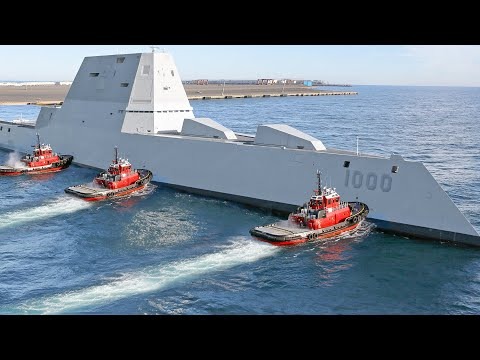
With these changes, the Navy anticipates a significant increase in strike capacity located forward in the Pacific by the end of the decade. Navy officials have highlighted the importance of proximity, stating that Hawaii’s location reduces transit time to potential operational theatres by several days compared to San Diego-based ships.
Implications for Regional Posture
By 2030, the U.S. Navy expects to operate five hypersonic-capable warships and submarines from Pearl Harbor. The repositioning of these assets reflects a clear shift in strategic planning, aimed at reinforcing deterrence in the Indo-Pacific through faster deployment and survivable strike options.
The USS Zumwalt’s relaunch represents not only a technical milestone but a change in how the U.S. Navy intends to use its most advanced ships. Once regarded as a concept vessel, the Zumwalt is now being redefined as a forward-deployed strike platform, tasked with missions that require precision, speed, and reach beyond current fleet capabilities.
While the technology is progressing, questions remain around missile integration timelines, targeting capabilities, and survivability standards. Testing and system refinement are ongoing, and further upgrades may follow as part of the evolving Conventional Prompt Strike architecture.
Original:https://indiandefencereview.com/us-navy-launches-8-billion-uss-zumwalt-stealth-destroyer-hypersonic-weapon/