Doctor Reveals the Harsh Truth About NASA Astronauts’ Return After Months Stranded in Space | Indian Defence Review
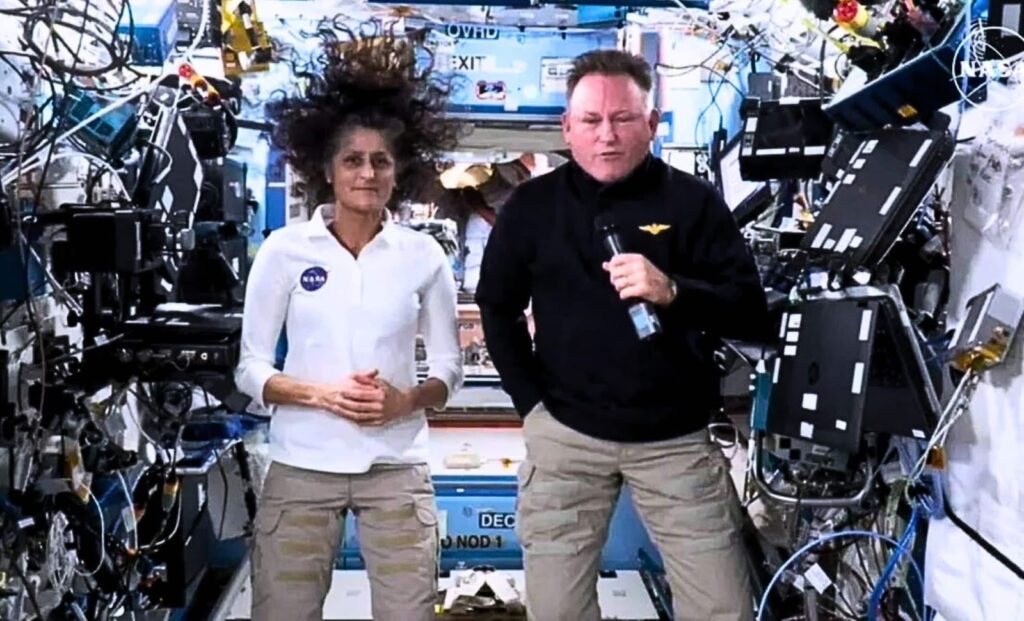
NASA astronauts Sunita Williams and Barry ‘Butch’ Wilmore are finally set to return to Earth after an unexpected nine-month stay in space. Their bodies have endured extreme conditions, and the road to recovery will be anything but easy.
Arezki Amiri
Published on March 6, 2025
After spending nine months in space, NASA astronauts Sunita Williams and Barry ‘Butch’ Wilmore are finally set to return home—but their journey is far from over.
Stranded aboard the International Space Station (ISS) due to a thruster malfunction, their extended stay has put their bodies through extreme conditions that will take weeks—if not months—to recover from.
Nine months without gravity: what it does to the body
When Williams and Wilmore touch down on Earth on March 19 or 20, they won’t just walk out of their SpaceX capsule and go home. Instead, they will be immediately rushed to a medical facility for intensive evaluations.
Experts warn that the effects of prolonged weightlessness and exposure to space radiation could leave lasting consequences on their health.
Dr. Vinay Gupta, a pulmonologist and Air Force veteran, estimates that the astronauts could need up to six weeks of rehabilitation before they regain their strength. Their first hurdle? Learning how to walk again.
“I’ve been up here long enough, right now I’ve been trying to remember what it’s like to walk,” Williams admitted in a recent call with students at Needham High School in Massachusetts. “I haven’t walked. I haven’t sat down. I haven’t laid down.”
Space radiation: an invisible threat
Beyond muscle loss, there’s an even bigger concern—radiation exposure. Unlike the radiation we experience on Earth, the cosmic radiation in space can penetrate deep into the body, damaging cells and increasing the risk of cancer. Dr. Gupta believes this exposure is serious enough to warrant a special cancer screening strategy for the astronauts.
“We want to take a different approach here, given that they had such a unique exposure history,” he warned.
Biomedical engineer Dr. John Jaquish added that the lack of gravity alone wreaks havoc on the body.
“The human body needs the Earth’s gravitational pull, and in the absence of that, a lot of things are not functioning correctly.”
The grueling road to recovery
Rehabilitation for astronauts returning from space isn’t just about getting their muscles back in shape—it’s about retraining their entire bodies. Their recovery will happen in three phases:
- Phase one – Relearning how to walk and rebuilding muscle strength.
- Phase two – Strengthening the entire body and reconditioning the cardiovascular system.
- Phase three – Regaining full physical performance.
Only after completing this rigorous rehabilitation program will Williams and Wilmore be able to return to their normal lives—though the long-term effects of their extended space mission remain unknown.
As NASA and SpaceX investigate what went wrong with the Starliner capsule’s thrusters, it is clear that space travel is as brutal on the body as it is on technology. Williams and Wilmore may be coming home, but their toughest mission is still ahead.
Original:
Doctor Reveals the Harsh Truth About NASA Astronauts’ Return After Months Stranded in Space
 admin
admin