admin
admin 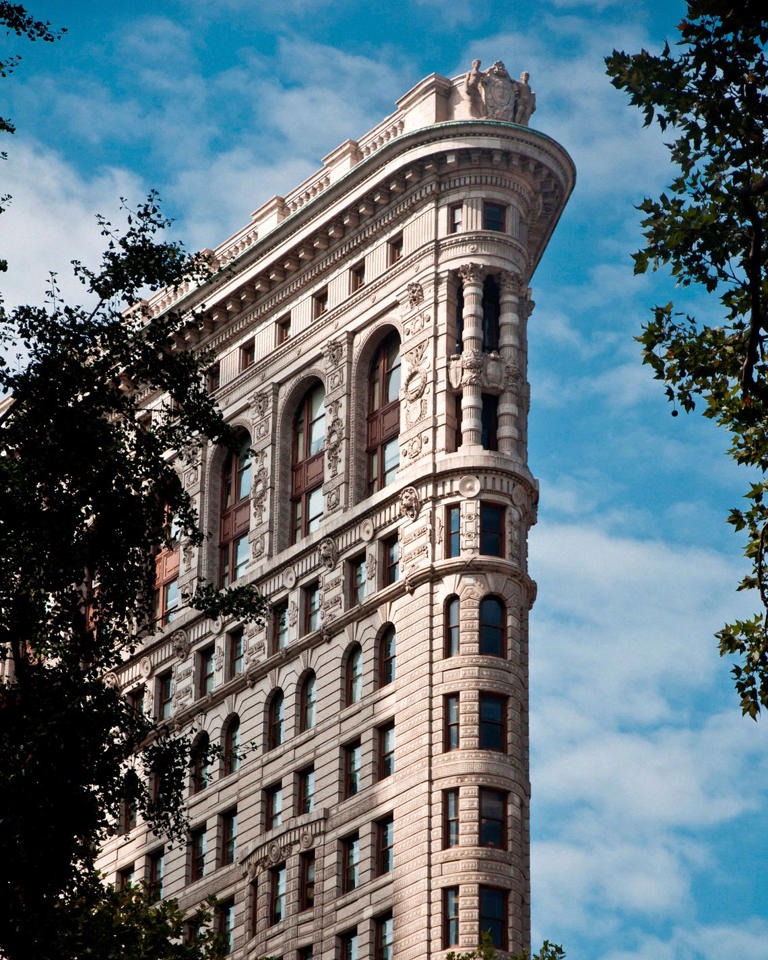
The façade of the Flatiron was designed to be divided into three different vertical tiers. The 18th and 19th floors, with north-facing terraces, larger windows, and higher ceilings, were the premier floors. REDA/Universal Images Group/Getty Images© REDA/Universal Images Group/Getty Images
Story by Kim Velsey
Plenty of stuff gets unearthed during renovations — old newspapers, wallpaper scraps, wide-plank wood floors, sometimes even windows. But no one expected to discover anything too surprising when the Brodsky Organization started gutting the interiors of the Flatiron Building for a condo conversion in 2024. (Brodsky, one of the building’s owners, is overseeing the project with the Sorgente Group.) The 123-year-old tower is, after all, one of the most extensively documented and photographed buildings in New York City. Besides the turn-of-the-century blueprints and construction drawings that have been preserved (around 40 pages — far less than the hundreds or thousands you’d get today, but hardly a thin record), it was an architectural and technological marvel of its era as one of the city’s first steel-frame skyscrapers, and documented as such. For decades, it also had a single office tenant, Macmillan Publishers, which presumably came to know the building’s quirks and secrets quite well.
,
In July, however, workers gutting the 18th floor noticed something strange. At the prow of the building overlooking Madison Square Park, demolition work had exposed part of a parapet wall along what had been a bay window. Pulling down the interior walls, they discovered the terrace, whose original use was confirmed by a drain that ran along the inside of the wall and ceiling.
,
Beyer Blinder Belle Architects & Planners, the firm overseeing the landmark’s exterior renovation, recognized the parapet — there was a matching one on the floor above. And that parapet on 19 encircled a small half-moon-shaped terrace, one of only two known outdoor spaces in the building. (The other, a terrace that edges the top floor, is a narrow space, originally used by the artists for whom the penthouse floor was built and enclosed by a high balustrade.) Examining photographs of the exterior, the architects saw that the columns on the 18th and 19th floors are continuous, with their base on the 18th floor and the capitals (the crown on top of the columns) on the 19th, and realized that the 18th floor had also originally been a terrace, one that had been hidden for so long that no one knew about it.
Related video: Why the Flatiron stands empty today (IT’S HISTORY)
At the heart of the Flatiron District in New York
“It was an amazing find!” said Carlos Cardoso, an architect and partner at Beyer Blinder Belle. Many old buildings have “hidden jewels,” he continued, but so far, the conversion had yielded mostly smaller-scale discoveries, like the trove of original fixtures that the longtime super had stashed in the Flatiron’s basement over the years — cast-iron vent covers and delicate metal stair railings that Studio Sofield, the interiors architect, repurposed as legs for the powder-room vanities. But a secret terrace was something else altogether.
,
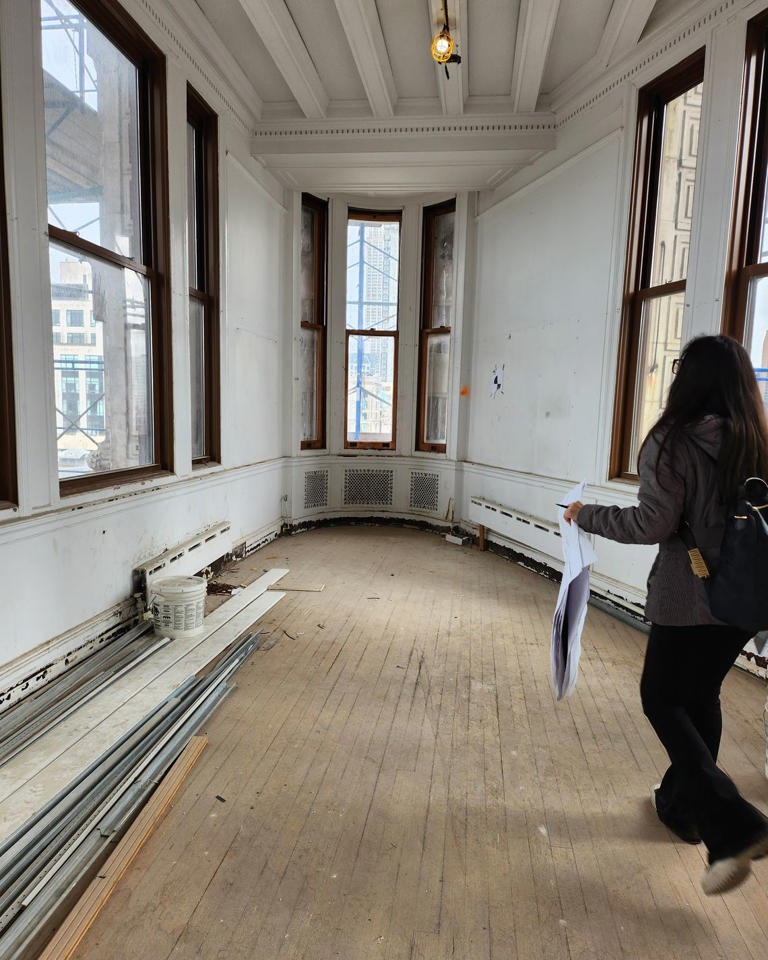
The 18th-floor terrace, when it was enclosed as a bay window. Beyer Blinder Belle Architects & Planners© Beyer Blinder Belle Architects & Planners
,
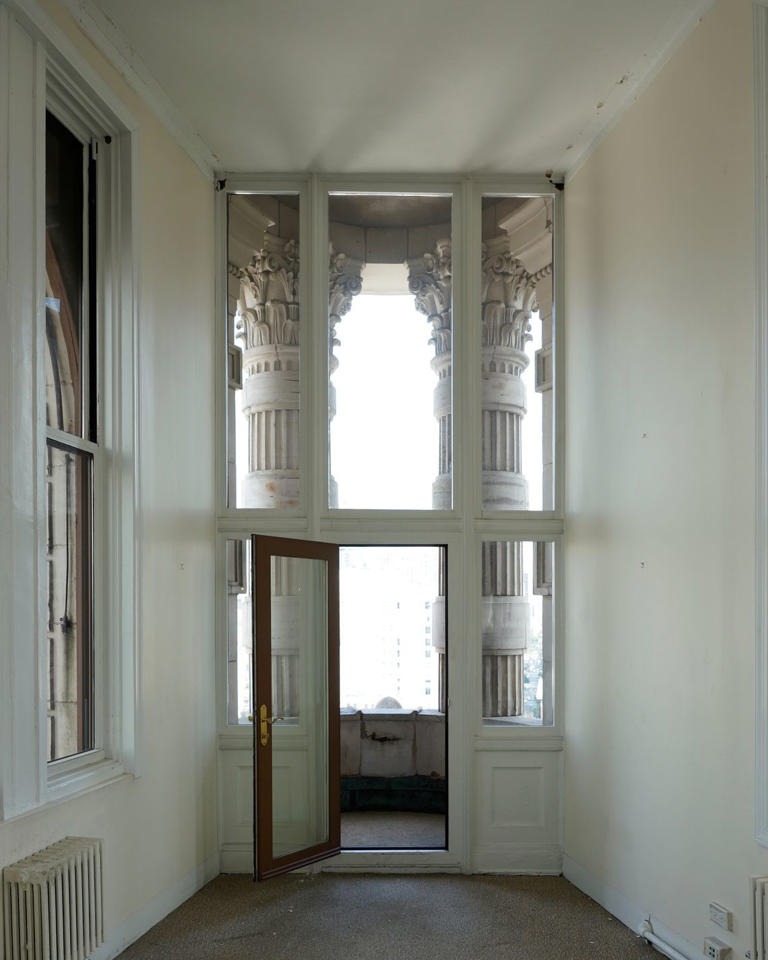
The 19th-floor terrace. Beyer Blinder Belle Architects & Planners© Beyer Blinder Belle Architects & Planners
,
At first, the architects and Brodsky didn’t know if they’d be able to restore the use of the terrace, which they felt was original to the design. The building is landmarked, and there was no documentation of the terrace — just the exterior photos showing the parapets and columns on the prow of the 18th and 19th floors. But Beyer Blinder Belle is working with the Landmarks Preservation Commission on approvals for the use and original design of the balconies.
,
Why the two terraces existed in the first place is something of a mystery. Harry Black, the son-in-law of George Fuller, who founded the construction firm that developed the Flatiron, had his office on the 19th floor, which along with the 18th floor was the prime office space in the building, with larger arched windows and higher ceilings. (The penthouse was added shortly after the Flatiron’s completion in 1905.) The architects at Beyer Blinder Belle believe that Black might just have wanted a special perk on his own floor. “It’s certainly reasonable to think that this may have been something the CEO wanted for himself,” agreed Alice Sparberg Alexiou, a historian and journalist who wrote Flatiron, The New York City Landmark and the City That Arose With It. And, perhaps for the design’s sake, the original architects, Daniel Burnham and Frederick Dinkelberg, decided to replicate the terrace feature on the floor below. The architects think it may be connected to the building’s original design concept, which divided the façade into three vertical portions, similar to a classic Greek column, with the 18th and 19th floors serving as components of the capital.
,
Whatever the case, at some point, the 18th-floor terrace was turned into interior office space. It’s possible that Black, who was a stickler about maximizing rentable square feet, thought he could get more for the floor if he enclosed it. (Now that it’s a condo, the opposite is true.) Black also insisted on adding what’s known as the “cowcatcher,” the rounded-front glass retail space, on the prow of the ground floor to make sure the building extended to the edge of the lot. “Burnham was furious with Harry Black for making him stick that on — he thought it was going to screw up the symmetry of the building,” said Alexiou.
,
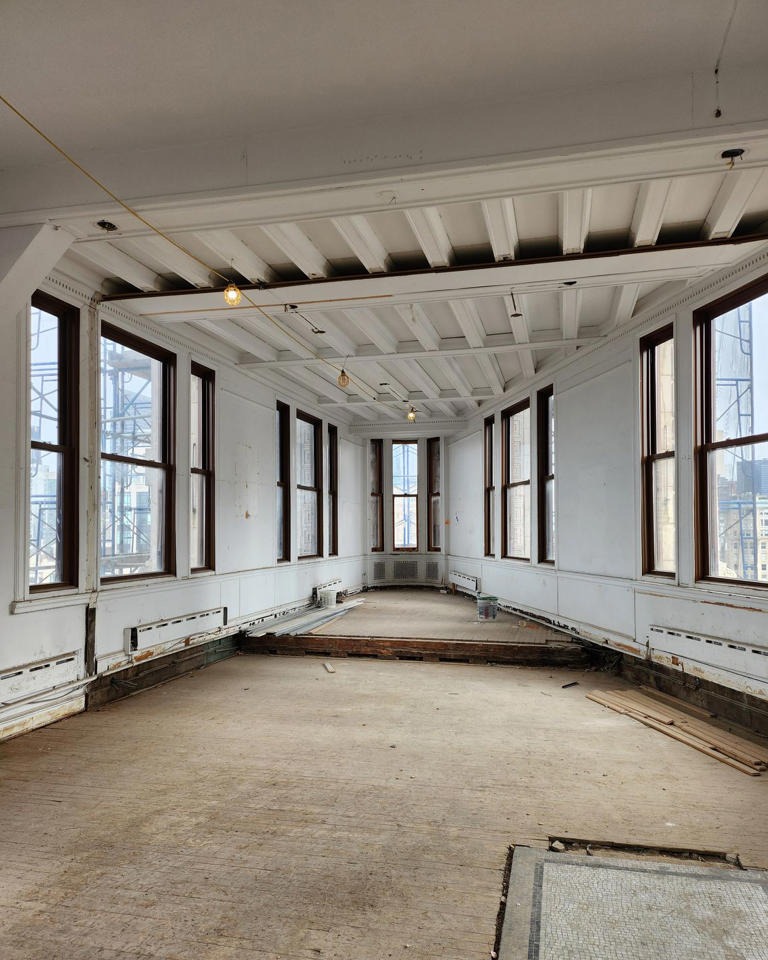
The 18th and 19th floors will be full-floor apartments. Beyer Blinder Belle Architects & Planners© Beyer Blinder Belle Architects & Planners
,
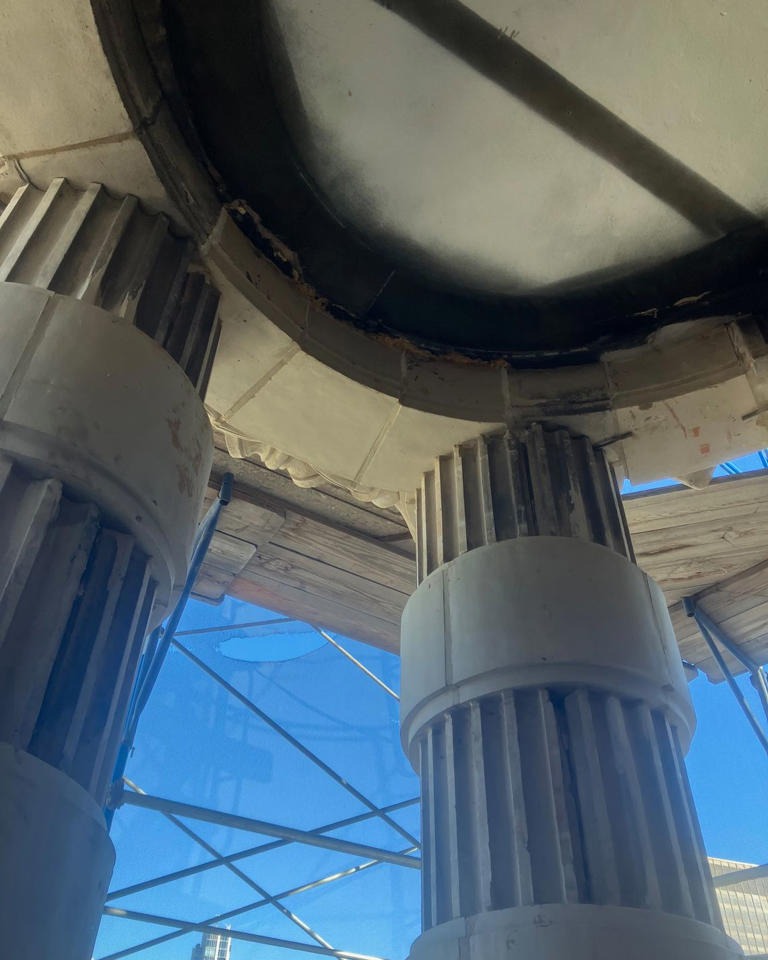
The 18th-floor terrace. Kim Velsey© Kim Velsey
,
When the conversion is done, which is estimated to be by the end of this year, both the 18th and 19th floors will be full-floor apartments. (All of the condos in the building will be either half- or full-floor and will range in price between $10 million to upwards of $50 million. Some of the units are already in contract.) When I visited on a morning in December, the 18th and 19th floors were noisy and crowded with construction equipment and workers. But stepping out onto the 18th floor’s terrace, now hidden behind a plywood door, it was suddenly quiet. The streets below were strangely empty for a weekday morning, and Madison Square Park, visible through the scaffolding, was deserted save for a few people and their pets braving the day’s frigid winds at the dog park. The terrace, as yet unrenovated, looked much as it presumably did at the turn of the century, an unusual feeling in a place as frequently and zealously remade as New York. It’s a small space, about eight feet by four feet, more balcony than terrace — the kind of spot you’d imagine stepping out on with a drink or a cigarette during a party. But this being 2026, not 1902, smoking will, of course, be banned when the building reopens.
,
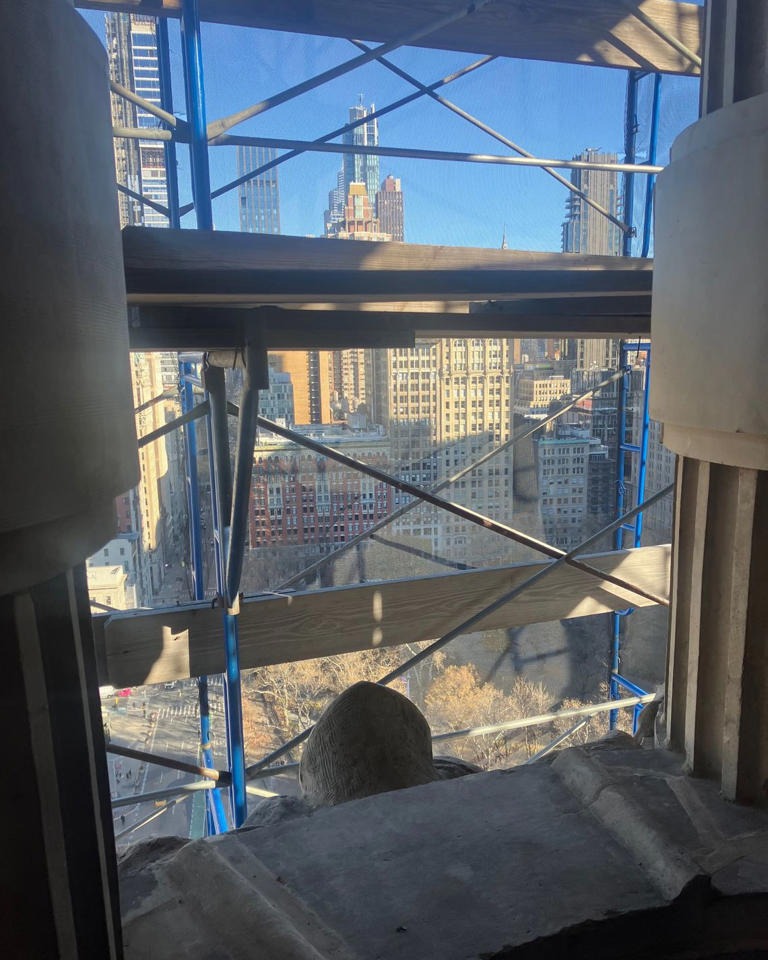
The terrace faces north, overlooking Madison Square Park. Kim Velsey© Kim Velsey
Original:
https://www.msn.com/en-us/money/realestate/what-construction-workers-found-gutting-the-flatiron-building/ar-AA1TByNL?ocid=BingNewsVerp