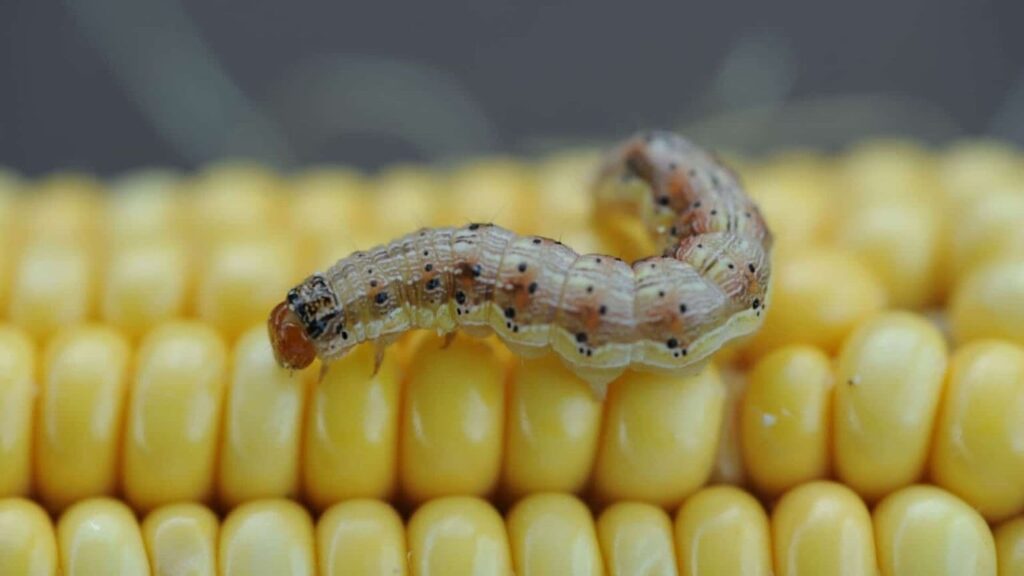
Corn earworm pests are aptly named as they feed on ears of corn. Steven Roberson, NC State University
The corn earworms are developing the ability to fly long distances as a result of feeding on a mixed diet of non-toxic and genetically modified toxic corn.
ByMrigakshi Dixit
Dec 02, 2025 07:51 AM EST
A new study from North Carolina State University reveals a surprising transformation occurring in sweet corn fields.
Common agricultural pests, the corn earworms (Helicoverpa zea), are developing the ability to fly long distances as a result of feeding on a mixed diet of non-toxic and genetically modified toxic corn.
Interestingly, this feast changes their wings, which become longer, narrower, and more tapered — eerily reminiscent of a fighter jet’s design.
“Wings from insects eating a blended toxic and non-toxic corn diet were stiffer and more able to travel in higher wind speeds,” said Dominic Reisig, professor and extension specialist of entomology at the university.
“These insects are able to get up into the winds and ride them longer distances,” the co-author added.
The pest problem
Though named for their primary food source, corn earworms are a major problem because they also feed on soybean, tomato, and cotton plants, making them a ubiquitous nuisance for farmers.
Corn fields act as an insect “factory”; the pests overwinter, build up generations, and lay eggs on corn silks in July.
“Almost every single ear of corn produces at least one caterpillar that becomes a moth when it grows up. That’s a lot of bugs. All of that activity also funnels into cotton and soybeans, and that’s why they’re such a big problem,” Reisig added.
Bt corn has been known for its frontline defense. It produces toxins fatal to pests like the corn earworm. The industry often promotes a blend of Bt and non-Bt corn, theorizing it helps manage resistance. However, this research challenges the conventional thinking.
Researchers aimed to determine whether corn earworms would exhibit noticeable physical differences when reared on a blend of toxic (Bt) and non-toxic corn. It was compared to those raised solely on either pure non-toxic corn or pure Bt corn containing two or three different toxins.
This investigation is pertinent because the vast majority of corn and cotton grown in the US incorporates Bt toxins for insect control.
The researchers compared the wing shapes of corn earworm moths raised on four different diets: a blend of toxic and non-toxic corn, exclusively non-Bt (non-toxic) corn, exclusively Bt corn containing two toxins, and exclusively Bt corn containing three toxins.
Diet-based changes
The study’s results showed a clear contrast in physical development between the two diets.
Moths raised on the three non-blended corn diets (pure non-toxic or pure Bt corn with two or three toxins) developed wings that were less aerodynamic, more brittle, and deformed. It reduces their ability to travel long distances.
Conversely, moths that consumed a blend of toxic and non-toxic corn underwent a “striking physical transformation” in just one generation. This alteration makes the wings more aerodynamic, increasing the moth’s ability to fly longer distances.
This sudden evolution, observed in just one generation, means these “super pests” can spread resistance to Bt toxins far more efficiently. The implications for farmers are enormous.
“It appears that resistance occurs faster when worms eat these blends, creating individual moths that have multiple resistance mutations,” Reisig said.
“This is one more piece of evidence that blending Bt and non-toxic corn pollen is really dangerous for resistance,” Reisig added.
The research provides new insights into how a crop’s diet influences pest spread.
The study was published in the journal Environmental Entomology.
Original:
https://interestingengineering.com/science/corn-pests-develop-fighter-jet-wings
 admin
admin