admin
admin 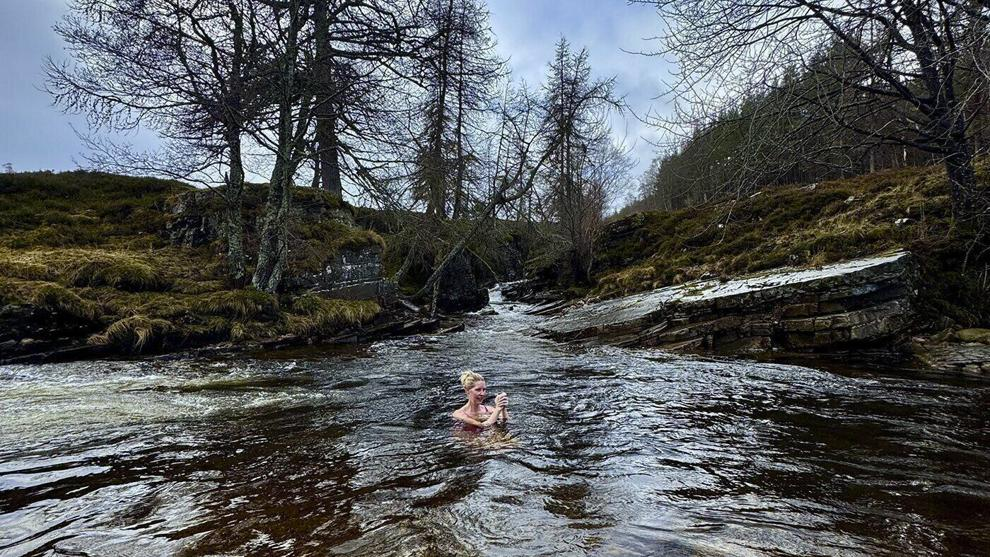
Writer Casandra Karpiak cold-plunging in the river.
Here, cold-plunging isn’t just a wellness trend. It’s a long-established practice that connects you to the landscape.
By Casandra Karpiak Special to the Star
Thursday, December 4, 2025
Article was updated 20 hrs ago
The winter water bites hard as my initial shock turns into a private test of resolve. It’s January in the northeast of Scotland, and I’ve immersed myself in the below-freezing current where the rivers Allt Connie and Ey Burn converge. Around me, the pine forests of Cairngorms National Park edge the banks, and the hills beyond lie under a muted quilt of heather and snow.
Tempting me at the water’s edge is a wood-burning sauna, converted from an old horse trailer, complete with a canvas warming tent and a wood-fired stove pitched beside it. Shivering from head to toe, I look over at my guide, Annie Armstrong, owner of the local tour company Wild Braemar, who is waist-deep like me but unflinching. As the river laps at her arms, she laughs through the cold.
I sink in another inch. At home in Vancouver, I cold-plunge weekly, but wild swimming beneath a lingering mist in Scotland feels almost primal. It stirs the same instinctive alertness that once guided 16th-century Highland clansmen and soldiers as they forded these icy rivers in mail and padded armour.
Scotland’s relationship with its outdoors continues to run deep. Locals grow up reading the elements like a language, knowing when the wind will turn sharp, when the lochs will glaze with ice, and when light will briefly break through the mist.
As the current keeps stealing my breath, I inhale in quick little bursts. Armstrong watches me with the calm of someone who has seen this moment play out countless times. “There is a shared camaraderie through the challenge of the cold,” she says. “People bond through doing this together.”
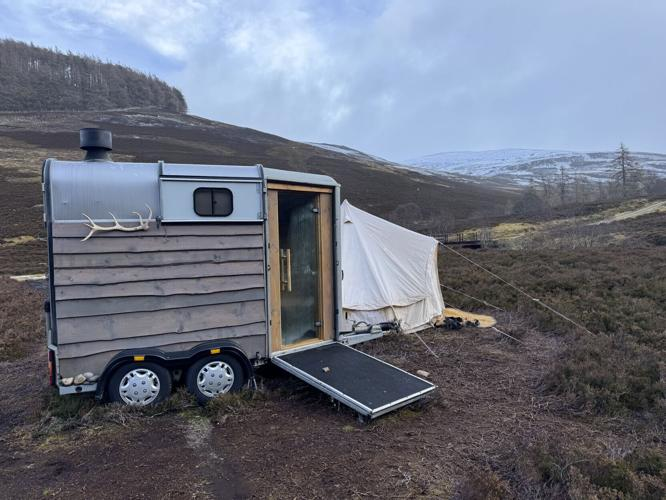
Wild Braemar’s wood-burning sauna, converted from an old horse trailer.
Casandra Karpiak
She dips her hands beneath the surface, reacquainting herself with the river she grew up in. “From my own experience, it gives me a unique perspective on the landscape, and helps me to feel more connected with myself and the land around me.”
Wild swimming is such a deeply embedded tradition in this country, it has even shaped the language, as Alice Goodridge, author of the guidebook “Swimming Wild in Scotland,” explains. “All the wonderfully specific Scots words linked to swimming say a lot about how normal cold-water immersion has always been here,” she tells me when we chat after my trip. “A dook simply means a dip. Dookers are people who swim, and a shivery bite is the first mouthful of something sweet after you’ve come out of the cold water.” The country abounds with river, loch and sea swimming spots; Goodridge’s book is a guide to more than 100 such places to plunge.
The chance to immerse myself in the tradition is partly why I’m in Scotland, following Armstrong into the Cairngorms through her popular wild swimming and sauna experience. We started at the Fife Arms, a luxurious boutique property that was once a 19th-century coaching inn, located close to Balmoral Castle. From the hotel’s setting in Braemar, a Highland village long shaped by royal footsteps and mountain air, we took a 10-minute drive to the hamlet of Inverey.
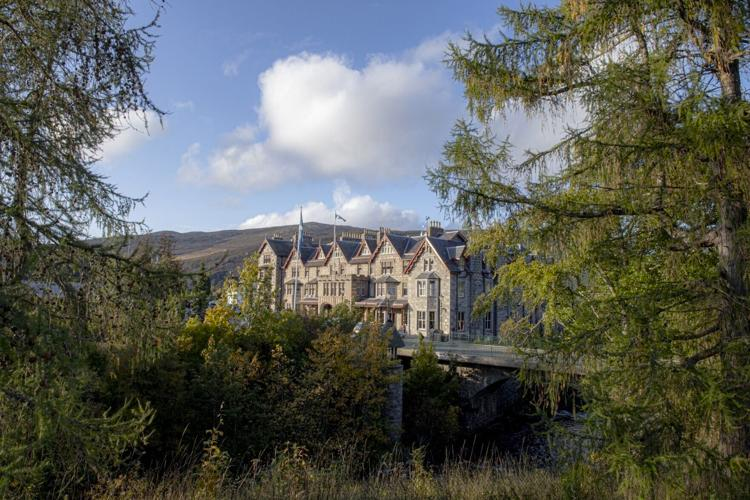
Located near Balmoral Castle, the Fife Arms is a boutique hotel that dates back to the 19th century.
Sim Photography/Fife Arms
It wasn’t until we reached the river and plunged in that I began to understand how much Scotland encourages this kind of immersion. The Scottish Outdoor Access Code permits the public to access most land, rivers and lochs for the purpose of enjoying the outdoors, as long as they behave responsibly. This freedom of exploration invites swimmers into places that would be off-limits in many other countries.
I try to pinpoint what sets these waters apart. My skin still prickles from the cold, a sensation that Armstrong knows well. She tells me these rivers hold centuries of belief. “There is a lot of folklore around water in Scotland, and some great water-based place names in Gaelic.”
Celtic tradition ties many river names to water goddesses. The River Dee, which flows through Braemar and Royal Deeside, traces its name to Deva, a freshwater deity. Perhaps that’s why swimmers often say they feel “cleansed” here. Many describe a nature-rooted reverence that rises in the water, a kind of awe that softens the edges between you and the landscape, if only for a moment.
I look over at the riverside sauna again. It feels contemporary at first glance, but as I learn from Goodridge later, it taps into an ancient Scottish tradition of sweat bathing. “Bronze Age sauna sites have been found in Orkney and Inverness, created by heating stones to generate steam,” she explains.
The sauna’s warmth can wait. I close my eyes and smile as Scotland’s wild side washes over me. Here, even the cold is comforting.
Casandra Karpiak travelled as a guest of the Fife Arms, which did not review or approve this article.
Original:
https://www.simcoe.com/things-to-do/travel/scotland-cold-plunge/article_58dfe7a2-3e4c-5f6b-884a-9a8dd68a1d41.html