admin
admin 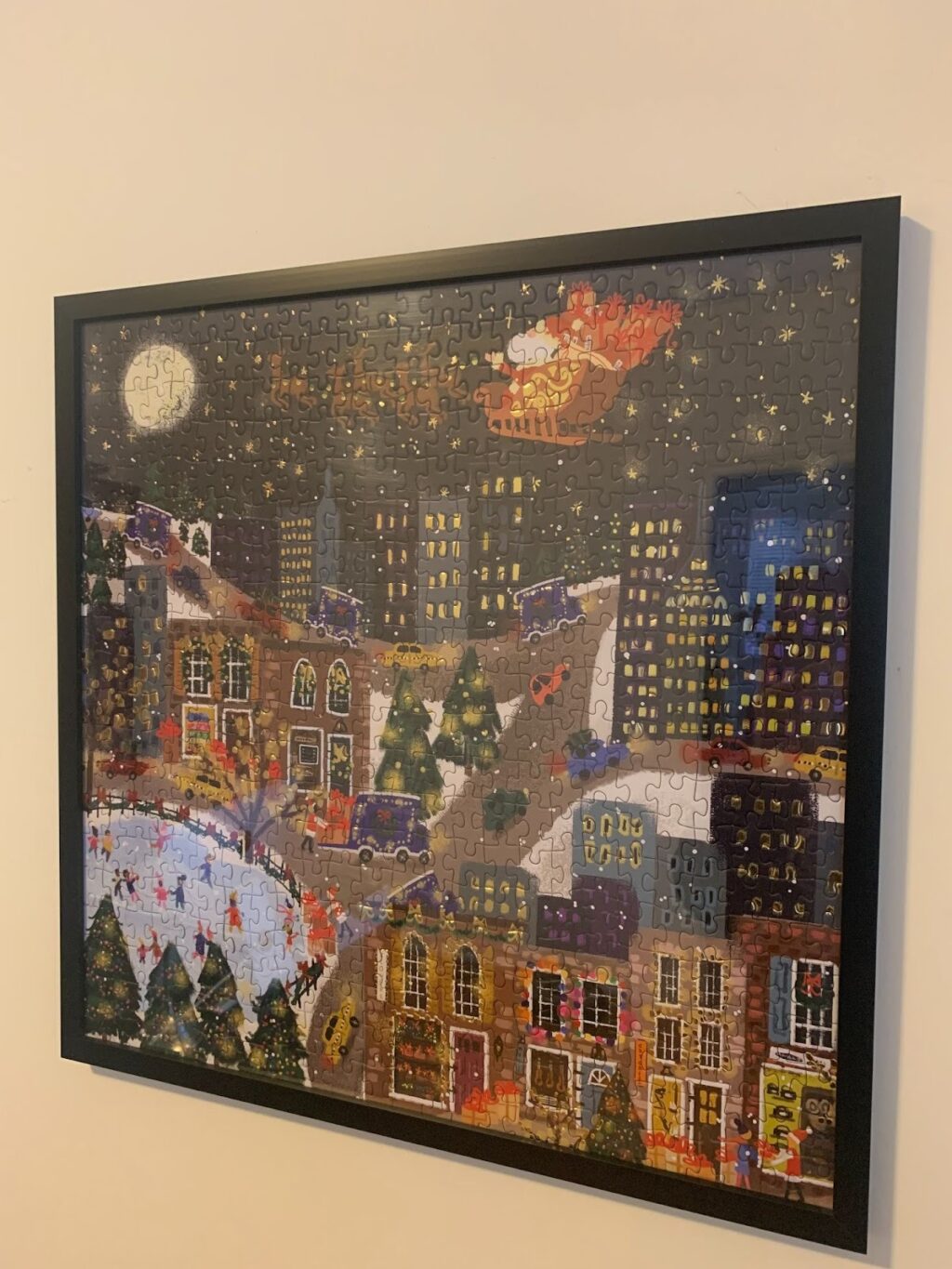
By NatMed, January 15, 2026
A while ago, my wife was preparing to take her three-week annual leave, which coincided with the Christmas holidays. Before that, she had been thinking about how to spend the holiday. Since she often browses “Little Red Book” (a Chinese social media platform), she saw some posts about jigsaw puzzles, which seemed like a good option. Although we had a few hanging on the wall at home, she had never done one, so she decided to give it a try. After much deliberation, she finally chose a Christmas jigsaw puzzle, decorated with lots of sequins, which she thought was very pretty. That day, we went to the INDIGO bookstore, but the one she liked was sold out, so she bought a similar one instead. You could tell she was quite excited.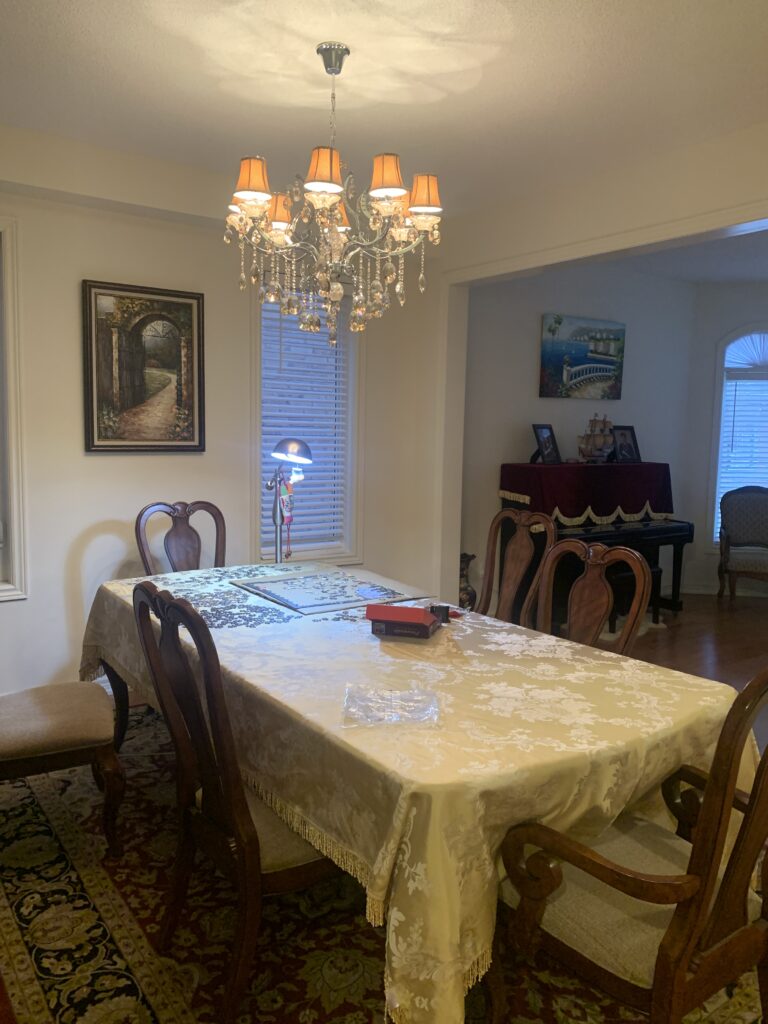
To prepare for this unforgettable moment, she specially found the rarely used dining room, spread a golden tablecloth on the large dining table, turned on the overhead chandelier. Feeling the lighting wasn’t bright enough, she placed a table lamp next to it. Everything was ready, and she could finally get started! She carefully opened the packaging, poured the 500 puzzle pieces from the bag onto the table, and looked at the pile of fragments, unsure where to begin. I reminded her to start with the areas with straight edges. An hour or so later, she called me, saying the puzzle was missing a piece; they must have made a mistake, the four sides didn’t match, and it wouldn’t fit together. I said that was impossible, you must have made a mistake. A little while later, when I checked again, the four sides had fit together.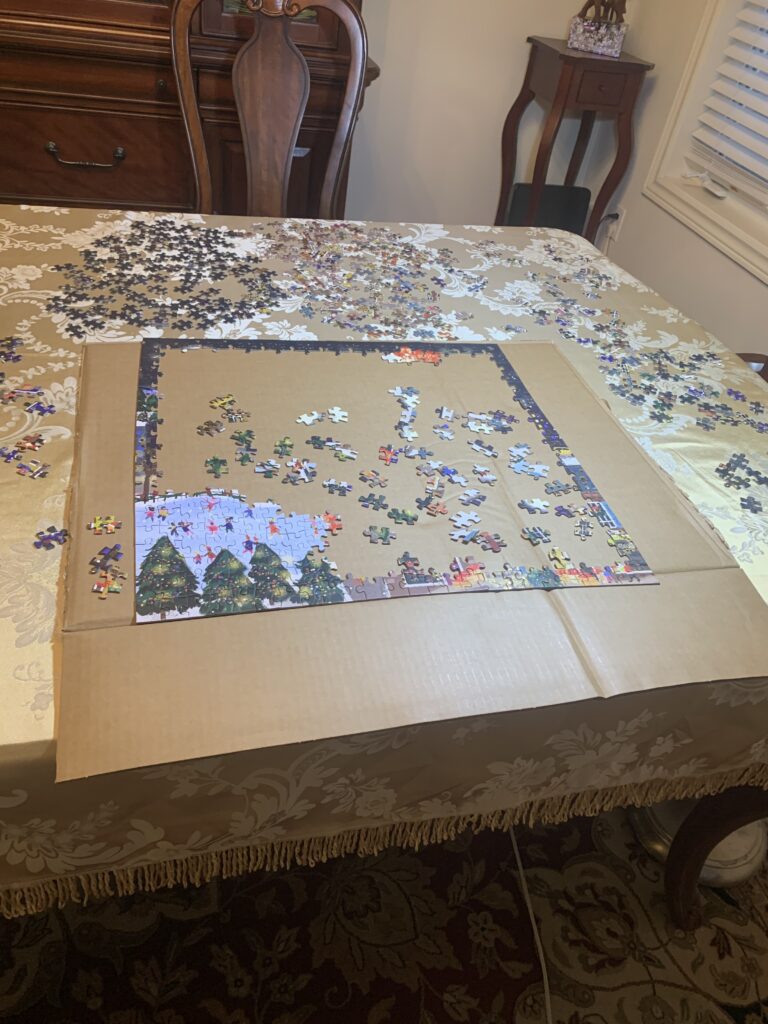
A day passed with little progress, and another day passed with still little progress. I asked her why, and she said it looked easy for others, but so difficult for her; it seemed puzzles weren’t her forte. A pile of pieces lay on the table, and over a week had passed, with only the bottom left corner pieced together—far from finished. It was supposed to be hung on the wall for Christmas, but Christmas was almost here, and it was still nowhere to be seen. That evening after dinner, I heard noises downstairs. It turned out reinforcements had arrived—my son was helping with the puzzle. He must have felt sorry for his mother and was giving her a hand. About three hours later, downstairs was quiet again. When I went downstairs before going to bed, I found a complete Christmas Eve picture lying there quietly.
Speaking of my son’s jigsaw puzzle history, it goes back more than ten years to when he was not yet two years old. At that time, his grandparents came to visit, and having nothing to do, they bought a 500-piece country jigsaw puzzle while shopping at Costco. After that, every time they did a puzzle, he would stand by the table, running around, helping to get this and that; he was the busiest person of all. They finished it in a few days, and then bought an old picture frame for a dollar at the yard sale. I painted it dark red, put the puzzle in it, and it still hangs on the wall of the downstairs bathroom. Later, when he grew up, he completed two more puzzles, which are now hanging in his room.
Anyway, the picture frame my wife ordered arrived. I helped her put the puzzle inside and hung it in her study. It seems like the mirrored surfaces of picture frames these days are all plastic? They used to be glass. They were strong and had a nice feel. Now they’re so light and thin, and not strong enough. A couple of days later, my wife found an even cheaper frame, saying it was half the price. So we took the old frame down, removed the puzzle, put the old frame back in its original box, and planned to return it later. Sure enough, a few days later, the new frame arrived. We hurriedly unpacked it, took out the frame, put the puzzle inside, and hung it on the wall. Our son came downstairs and pointed out that the picture was bulging outwards. Apparently, you get what you pay for; this plastic sheet with a mirrored surface is thinner and less strong. My wife regretted it. I told her we didn’t need to exchange it, but she wouldn’t listen, and now all this trouble has happened. She told me this was the only time I was right. Fortunately, the previous picture frame hadn’t been returned, so we switched back to the first picture frame. This time, it was finally the final decision.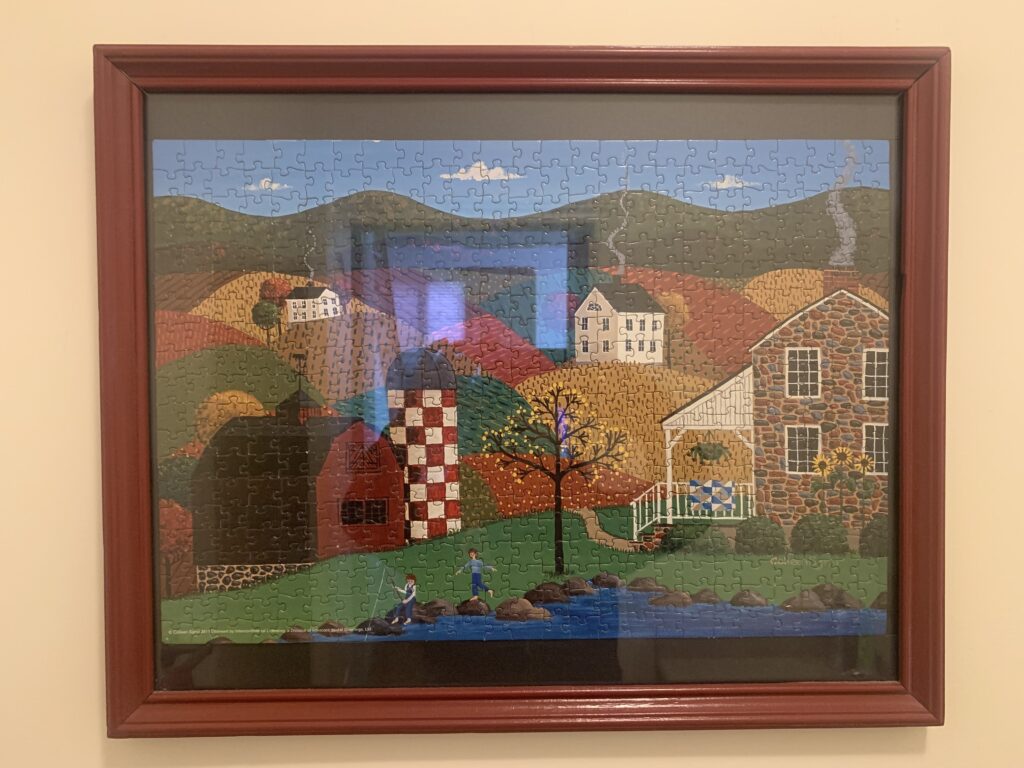
Why did we insist on changing the frames? There was another, more important reason: right after Christmas, my wife discovered a jigsaw puzzle sale—half price! For the same price, we could get two. Sounds like a good deal, right? Considering the common principle of price matching—where retailers consider their prices the lowest in the market to gain a competitive edge—we opted to offer the same price to anyone else. So, the next day, we drove to the shopping center. 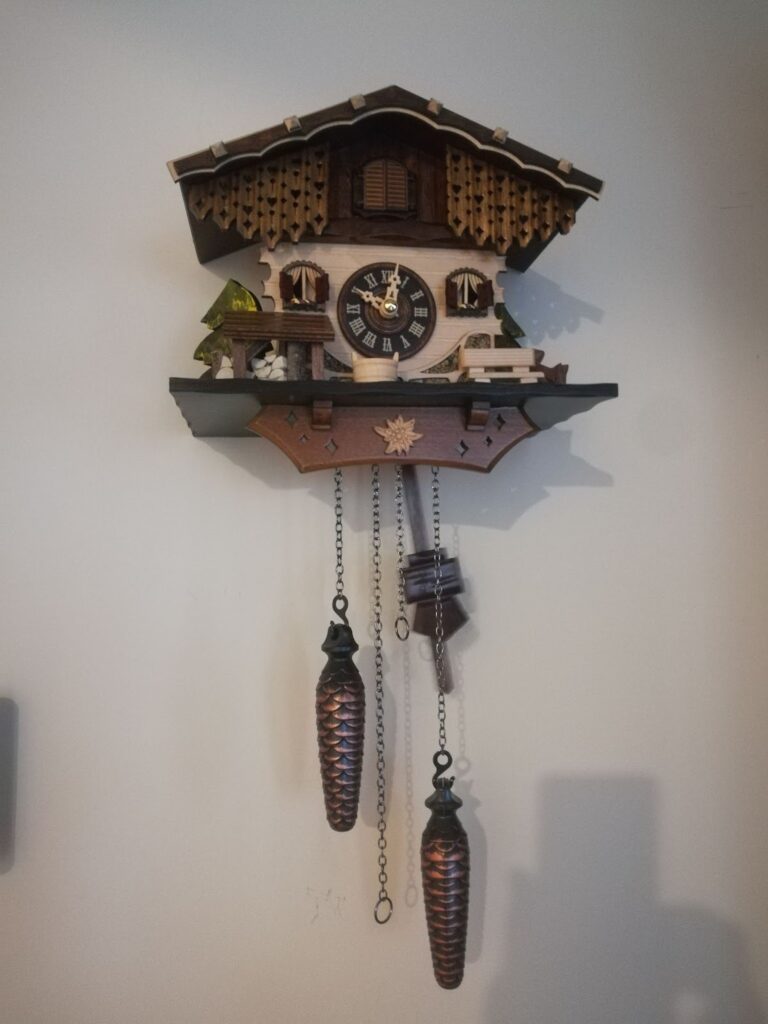 It was the Christmas holiday season, and parking was incredibly difficult. We found a corner; I waited in the car while she went to negotiate with the store. About half an hour later, she returned with a jigsaw puzzle box. The long wait was because the store said they didn’t have price matching, but seeing my wife’s sincerity, they decided to make an exception. That’s how we got the second puzzle, which meant needing more frames, hence the back-and-forth with frames. So far, because the new frames haven’t arrived, the completed second puzzle is still quietly lying in that corner。