admin
admin 
The Hidden Side of Elon Musk: He Never Founded PayPal Or Tesla, so WHY DID HE SUCCEED? | Indian Defence Review
Elon Musk’s rise to power wasn’t just about genius and hard work. Behind the myth lies hidden financial backing, government deals, and a talent for rewriting history. The real story of how he built his empire is far more complex than it seems.
Arezki Amiri
Published on March 5, 2025
Elon Musk is everywhere. Visionary genius, pioneer of space exploration, revolutionary of electric cars… His name has become synonymous with innovation and success. But behind this carefully maintained image lies a far more complex, and even troubling, reality.
Where does Musk’s fortune really come from? Is his rise the result of sheer hard work, or a narrative skillfully crafted to his advantage? Digging deeper, we uncover massive public funding, well-placed gambles, and a knack for taking credit for others’ ideas.
The privileged childhood of a “self-made man”
The idea of a self-made billionaire is appealing. But Elon Musk was never struggling to make ends meet. His father, Errol Musk, was a wealthy South African engineer and investor in the emerald trade. Even he admitted:
“We had so much money that we couldn’t even close the safe.”
When Musk launched his first startup, Zip2, in 1995, he wasn’t starting from scratch. His father gave him $28,000—a “minor detail” Elon downplays today.
Alongside this financial support, Musk also benefited from family connections and an elite education. Far from the garage-dwelling genius cliché.
ZIP2 and PayPal: Early Millions and Humiliating Dismissals
Musk quickly learned a harsh reality: becoming a tech giant doesn’t happen overnight. With Zip2, he attracted investors, but was soon pushed aside as CEO.
His coding skills were deemed weak, and a more experienced CEO was brought in. When Compaq bought the company for $307 million, Musk made millions—but he was never truly in control.
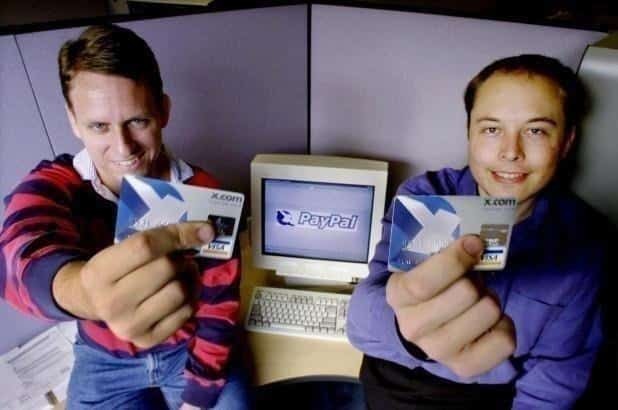
Then came X.com, an online banking startup that merged with Confinity to form PayPal. Musk loves to claim he co-founded PayPal, but the core technology actually came from Confinity.
By September 2000, while he was away on a trip, the board of directors fired him. The main reason? His reckless decisions, including trying to switch PayPal’s entire infrastructure from Unix to Microsoft Windows, sparking outrage from the tech team.
Yet, when eBay acquired PayPal in 2002, Musk walked away a rich man. Not because of his leadership—but because he had backed the right company at the right time.
Tesla: A Takeover, Not a Creation
To most people, Elon Musk founded Tesla. The truth? Tesla Motors was created in 2003 by Martin Eberhard and Marc Tarpenning. Musk only got involved in 2004 as a major investor. With his PayPal millions, he bought his way onto the board and gradually took over.
By 2007, Martin Eberhard was forced out, with Musk pulling the strings. In 2009, Eberhard even sued Musk, accusing him of rewriting history to claim credit. The lawsuit was eventually settled, allowing Musk to call himself a “co-founder.”
But there’s a big difference between founding a company and buying one and taking over. The legend was being carefully crafted.
SpaceX, Tesla… and Billions in Public Money
Another key ingredient in Musk’s success? Government money. In 2008, Tesla was on the verge of bankruptcy. In 2009, Musk secured a $465 million loan from the U.S. government—a crucial lifeline. But there was a catch: the loan required backing from an external investor.
The problem? Daimler (Mercedes) refused to invest in a failing company. Musk lied. He told Daimler the government loan was already secured. Feeling reassured, Daimler invested $50 million. With that investment, Musk then secured the loan, saved Tesla, and took the company public six months later.
And the public money didn’t stop there. According to the Los Angeles Times, Tesla, SpaceX, and SolarCity had received at least $4.9 billion in government aid by 2015. Today, that number has skyrocketed.
Between subsidies, government contracts, and selling carbon credits to struggling automakers, Tesla has survived and thrived on public funds. An interesting contradiction for a man who constantly criticizes government handouts.
The Art of Media Manipulation
Over the years, Musk has carefully shaped his image, even at the cost of twisting the truth. Recently, he bragged about being an elite gamer in Diablo 4 and PoE 2, but internet sleuths uncovered that he was cheating—his supposed high scores happened while he was physically somewhere else.
Caught red-handed, Musk refused to apologize. Worse, he removed the verification badge from streamer Asmongold, who had mocked him, and launched personal attacks on him via X.
This isn’t the first time. Musk falsely claimed to have founded PayPal and Tesla, promised fully autonomous cars “next year” every year since 2015, and called Hyperloop a revolutionary idea—even though the concept had existed for decades.
The Most Powerful Man in the World?
Today, Musk is more than just a billionaire. He owns Tesla, SpaceX, X (formerly Twitter), an AI company, and holds massive political influence. His support for Donald Trump and his control over one of the world’s biggest social media platforms make him a central figure in both media and politics.
Between Genius and Opportunism: The Legend of Elon Musk
Elon Musk is intelligent, ambitious, and strategic. He has made the right investments at the right time and has helped Tesla and SpaceX grow. But the idea that he built his empire alone, purely through genius, is a myth.
Between government funding, opportunistic takeovers, carefully curated storytelling, and outright distortions of the truth, Musk’s true mastery lies in controlling the narrative. And now that he’s at the top, who will dare challenge him?
Original: