admin
admin 
Kitchen, black plastics, and gas: what studies now say about chemical risks at home.
By Adrián Villellas
Published on: January 20, 2026 at 3:32 PM
In just a few months, we’ve gone from headlines urging everyone to throw away all black plastic spatulas to another, less flashy but perhaps more serious warning about gas stoves. The question that remains is simple: What real risk is there in a typical home kitchen?
Black plastic utensils: less alarm, same underlying problem
 It all started with a study in the journal Chemosphere that analyzed 203 black plastic household products, many made from recycled plastic. The study found flame retardants in 85 percent of the items tested, primarily the compound BDE 209 , a persistent contaminant often found in electronic waste such as computer or television casings.
The study calculated that a person cooking with a highly contaminated utensil could ingest about 34,700 nanograms of BDE 209 daily. The problem is that the authors made a mathematical error when comparing that figure with the reference dose considered safe by the United States Environmental Protection Agency and underestimated that value by a factor of ten.
After the correction, the numerical conclusion changes significantly. The estimated intake from the utensil is about ten times lower than the safe reference limit for an adult. In other words, the risk posed by a single, undamaged black plastic spatula appears low in toxicological terms according to the EPA’s own parameters.
Even so, the study carries an unsettling message. The presence of BDE 209 and other flame retardants in kitchen utensils and toys makes it clear that plastics from electronic waste, containing hazardous additives, are entering the recycling chain without sufficient oversight. The authors emphasize that the underlying problem isn’t just a single piece of cutlery, but rather a circular economy that also recycles chemicals we wanted to leave behind.
What can an average household do with this information? The experts cited in the reports reviewing the study recommend not panicking or emptying drawers, but rather applying a certain principle of precaution. Prioritizing stainless steel, wooden, or silicone utensils when it’s time to replace them, and discarding badly scratched or burnt plastics, is a reasonable way to reduce exposure without suddenly generating more waste.
Gas and benzene stoves: a concern that goes beyond the headline
While concerns about spatulas were being downplayed, another study focusing on gas stoves quantified something many people suspect when they smell smoke in a closed kitchen. The combustion of gas and propane emits benzene, a volatile organic compound classified as a human carcinogen by the International Agency for Research on Cancer and the U.S. EPA.
The new study, published in the Journal of Hazardous Materials, combines real-world measurements in homes with an indoor air quality model to estimate benzene concentrations in different types of houses across the United States. It focuses on the five percent of kitchens that emit the most benzene, affecting approximately 6.3 million people, and simulates scenarios with low, medium, and high kitchen usage, with and without ventilation.
In scenarios of medium to high gas stove usage without adequate ventilation, indoor benzene concentrations frequently exceed the health guidelines used by the World Health Organization to assess lifetime cancer risk. The study estimates that the increased likelihood of developing cancer from this exposure is up to 1.85 times higher in children than in adults, due to their lower body weight and physiology.
The model also shows that the problem isn’t confined to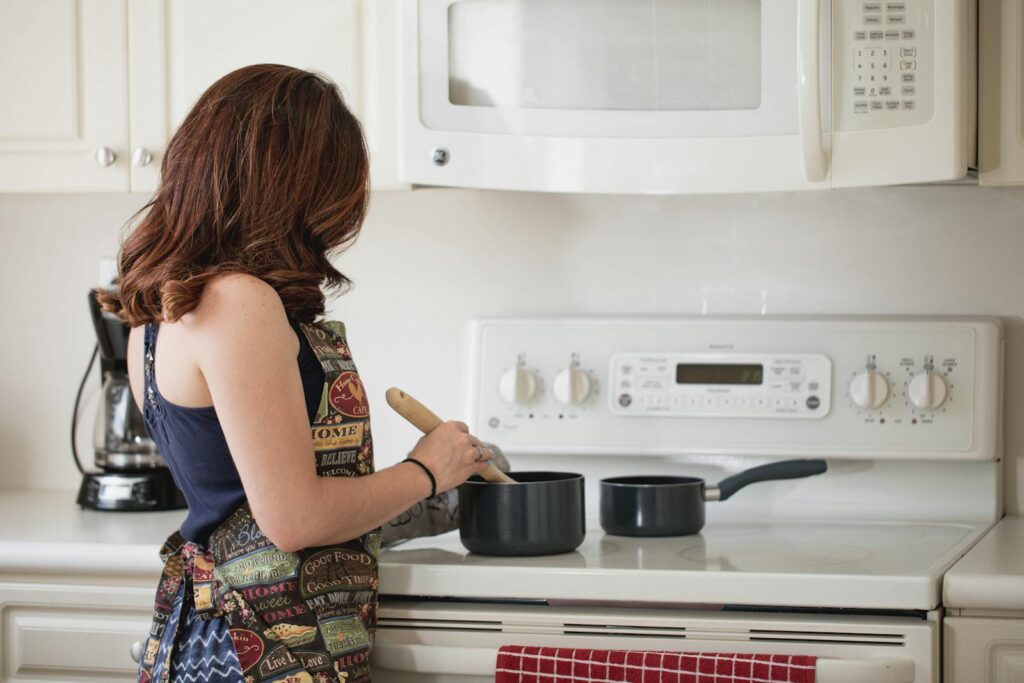 . After one or two hours of cooking, benzene spreads throughout the living room and bedrooms. In small, poorly ventilated apartments, average bedroom concentrations can exceed the eight-hour reference value used by the California Environmental Protection Agency for non-carcinogenic effects for several hours.
The good news is that ventilation measures largely work. Opening all windows during the day reduces benzene concentrations by 95 to 99 percent compared to a closed home. An extractor fan that vents air to the outside with a capture efficiency of 75 percent or higher also significantly reduces exposure, although not always below the risk levels for the most polluted homes.
What does all this mean for your kitchen?
So, everything needs to change now. In practice, the data points to something more nuanced. In the case of black plastic, the miscalculation has lessened the immediate fear surrounding a single utensil, but it has revealed a flaw in the control of recycling flows and the presence of flame retardants in products that come into contact with food. In the case of gas, the message is clearer. Cooking frequently with gas in small, poorly ventilated spaces adds an avoidable risk, especially for children who breathe that air every night.
For an average household, sensible steps include ensuring good ventilation whenever cooking, using an extractor fan to vent air to the outside, and, when it’s time to renovate the kitchen, seriously considering electric or induction options that don’t emit benzene or nitrogen dioxide into the home. At the same time, it’s worthwhile to take advantage of cookware replacements to gradually reduce the use of opaque recycled plastics that don’t provide clear information about their additives.
The scientific studies on which this information is based have been published in the Journal of Hazardous Materials .
Original:https://www.ecoticias.com/vida-saludable/una-simple-cena-podria-exponerle-a-la-misma-sustancia-quimica-cancerigena-que-el-humo-del-tabaco