admin
admin 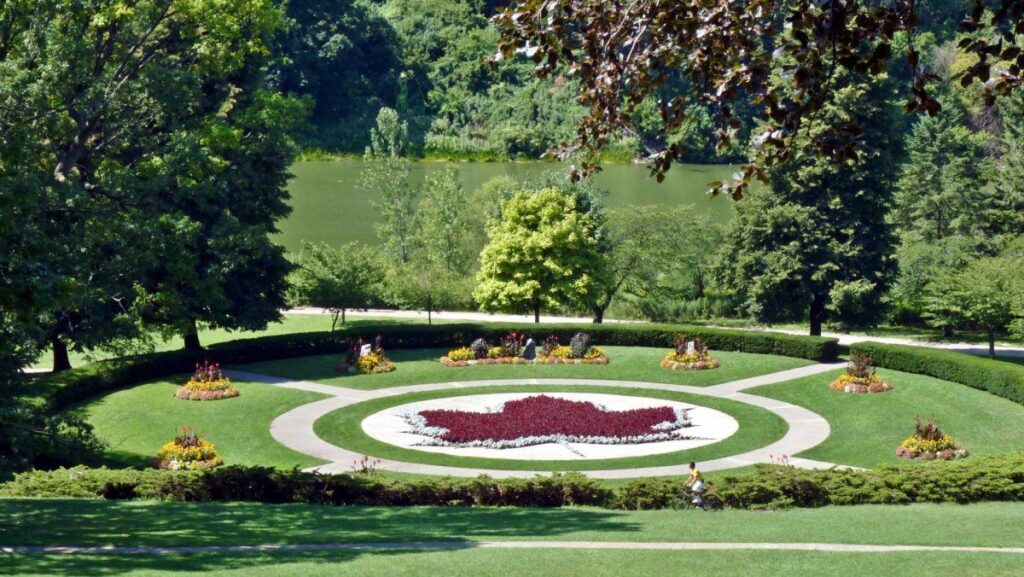
By NatMed, May 12, 2026
“If you live in Toronto, you must have been to High Park. It’s a cherry blossom rain in spring, an open-air theater in summer, and the most vibrant red maple leaves in autumn. But have you ever wondered how many secrets you don’t know are buried beneath these beautiful scenes?”
On these 400 acres of land, transactions that changed the fate of Toronto took place, the sounds of Victorian carriages echoed, and legends of ghosts and curses circulated. Today, I will take you back to the era of the manor house in the wilderness.
Indigenous people – Baptism of Fire
“The story begins 7,000 years ago. Long before European immigrants set foot on this land, the indigenous Anishinaabe people were already living here.”
You may have seen these massive black oak trees in the park; they belong to the extremely rare ‘Oak Savannah’ ecosystem. This landscape has existed for thousands of years not by chance, but because the Indigenous peoples consistently practiced controlled burning. They used fire to clear weeds and allow the oak trees to thrive. When you walk beneath these ancient trees, you are actually traversing thousands of years of natural heritage. This land didn’t officially change hands until 1787 through the ‘Toronto Purchase.’
The Howards’ “High Park” estate
John Howard immigrated to Canada from England with his wife Jemima in 1832.John Howard accepted a position as a draftsman at Upper Canada College, where he worked for 23 years. During this time, he became Toronto’s first professional architect and one of the earliest official surveyors. He planned Toronto’s harbor, waterfront, and islands, and designed some of the city’s first sewers, bridges, streets, and sidewalks. John Howard worked for 20 years, often becoming exhausted. Jemima played a crucial role in John’s successful career, preparing the specification documents for all his projects. In addition to his professional work, John’s amateur watercolors offer a valuable record of 19th-century Toronto life. Jemima was also an amateur painter, and her work primarily focused on romantic themes.
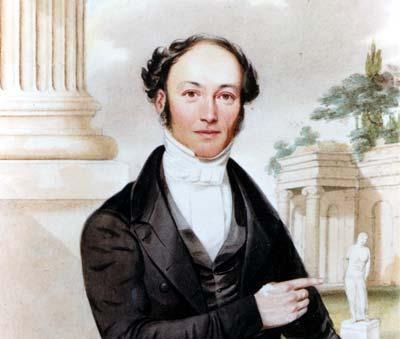
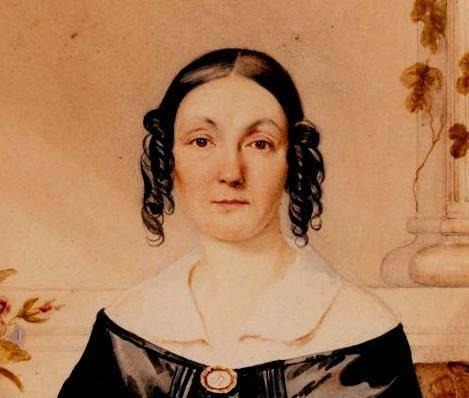
In 1836, the couple planned to run a sheep farm, so they bought 165 acres of rural land for about one pound per acre.The land is rectangular, from that time Lake Shore Road Extending northwards to Bloor Street。
In 1837, Howard personally designed and built his residence on the hillside at the southern end of the estate.
He named the house “Colborne Lodge” in honor of his patron, Sir John Colborne, the Deputy Governor General of Upper Canada, paid tribute to the man who launched his career.
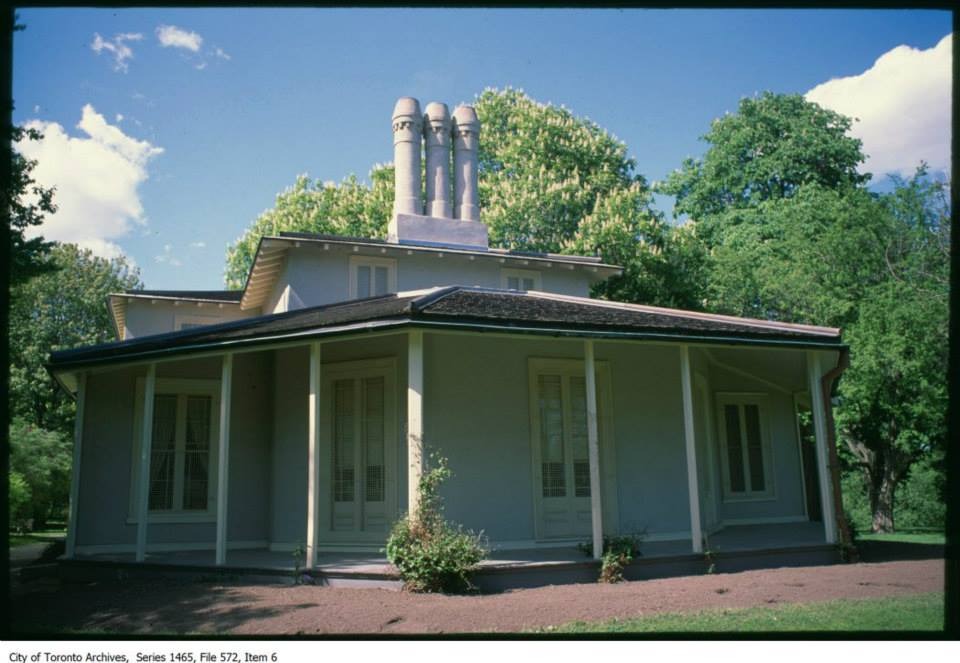
Colborne Lodge, It is rare in North America Regency Picturesque architecture Example. The house originally had only 3 rooms. It was subsequently expanded until 1855, when it was increased to 22 rooms, reaching its current size.
It features spacious balconies that open onto gardens and parks. The main entrance is located on the west side of the building. A tall, three-sectioned chimney stands at the center of the building, providing heating for the house. It is equipped with advanced facilities such as indoor flush toilets and rooftop water collection systems. Despite the expansion, he remained true to the original design concept, allowing it to blend romantically with the rural landscape. The porch, in particular, not only provides outdoor living space but also shades the main hall in the summer.
The interior decoration retains the style of the mid-19th century. This architectural style is more common in Britain and is often used in buildings in natural environments, aiming to complement the natural surroundings rather than overshadow them.
Howard’s house, built on high ground overlooking Lake Ontario, is nestled among various vegetation to enhance its romantic ambiance. (Furthermore, the lake view may have reminded John and Jemima Howard of the elevated seaside villas and houses of early 19th-century England.)
Because of its elevated position, offering breathtaking views of Humber Bay and Lake Ontario, he named it: “High Park”。
Shortly thereafter, Howard then purchased a large tract of land to the east and began real estate development, planning streets and plots for sale. He named the main north-south street in the development Indian Road, because it followed an old Native American trail. Due to its distance from the city center, the area was not well-received, and sales were slow.
This is a real estate advertisement from 1883, promoting the property and highlighting the health benefits of High Park.
During those years, High Park was the Howards’ private paradise. They were avid gardeners, cultivating orchards and expansive gardens around their home. The couple often strolled and rode in carriages there, and John also enjoyed hunting. They also built a small houseboat on the southeast bank of the Grenadier Pond which was also their property. The Howards and their friends sailed and fished on the pond, and in winter they skated and collected ice.
Invasion of Industrial Behemoths
Before the arrival of railroads and modern industrialization in the 1850s led to the gradual filling of the waterfront, the Parliament House overlooked Toronto Bay.
In the early 1850s, the City of Toronto sought to beautify the waterfront and provide residents with more convenient access to the water. A 100-foot (approximately 30-meter) wide waterfront promenade was designed to run along the entire lakefront, starting at Spadina Avenue and ending at Parliament Street.
At the time, Toronto was in the midst of a period of rapid expansion.Officials from the Grand Trunk Railway learned of the Esplanade plans and pressured the city government to allow them to use the road. On January 21, 1856, the City of Toronto agreed to allow the Grand Trunk Railway to occupy a 40-foot-wide strip of land in the middle of the 100-foot-wide road. Thus, In pursuit of maximum profits, railway tycoons readily laid rails directly onto the lakeshore. The waterfront lawns originally reserved for citizens were replaced by freight yards and coal piles.
In the first year of operation of the Lakeside Boulevard, train traffic grew faster than expected. By the spring of 1860, the Grand Trunk Railway’s lines covered more areas of the Lakeside Boulevard, further reducing space for pedestrians and horse-drawn carriages.
In the 1880s, in an effort to improve traffic capacity, the railroad considered adding more tracks to the Esplanade, bringing the inconveniences caused by this expansion to a peak. Although these plans were considered, none of them actually addressed a major problem with the Esplanade: pedestrian safety. Despite a speed limit of 6 kilometers per hour (4 miles per hour) on the Esplanade, train-related accidents and fatalities continued to rise.
On May 24 of the same year, the danger posed by the existing railway corridor along the coastal road reached its peak:James Frazier, an engineer on the steamship Corinna, was killed in a collision with a train at the Bay Street intersection. The incident was widely reported in the media and caused a sensation at the time.
This illustrates the immense pressure faced by urban planners at the time: progress came at the cost of severing people’s connection with water. Toronto became the only city that “faced a lake but couldn’t reach it.”
“Saving the Oak Trees”
It was written by Ernest Hemingway under a pseudonym and published in the Toronto Star.
In 1923, before becoming a renowned novelist, Ernest Hemingway worked alongside a group of obscure reporters at the Toronto Daily Star. That autumn, he wrote a report under the pseudonym Peter Jackson (supposedly to earn some extra money) about a disease that was ravaging the famous oak trees in High Park, pointing the finger at fungi while also specifically at the fumes permeating the congested city—proving that in Toronto, the story hadn’t really changed, only the byline had.
Generous gifts
While the southern railway was sealing off the city with its tracks, Howard was reserving a breathable forest for the city on the northern hills. Every window he designed was meant to offer a direct view of the lake.”This is a lake-view house from 180 years ago.”This further highlights the stark contrast between this tranquility and the bustling steel expansion to the south.
During this period, John and Jemima lived intermittently in Colborne Lodge and their home in town until John retired in 1855, at which point they moved permanently to the cottage.
Furthermore, the story of Colborne Lodge is made even more captivating by the fascination with 19th-century medicine, disease, extramarital affairs, and ghost stories.
Here, we need to explain something first. In 1873, in their later years, the Howards made a decision that shocked the entire city: they would donate their 165 acres of private property to the citizens of Toronto.
The Deed
The Howards’ generous gift came with some strings:
The park must be kept in a natural state
It must be for the free use, benefit and enjoyment of all citizens
Drinking alcohol must not be allowed in the park
The name must remain “High Park”
John and Jemima would receive $1200 a year and would live in High Park at Colborne Lodge on a private parcel of 45 acres. Upon the death of one, the other would receive an annual pension of $1200
The City of Toronto must maintain the Howards’ burial site forever
Once you examine the reasons for this decision, you’ll understand. John and Jemima had no children together, but John had three children with his longtime mistress, Mary Williams. Having mistresses wasn’t uncommon at the time, but it was usually kept secret. However, in a small town like this, it was impossible to keep Jemima in the dark. One of them, named Kobe (originally John Kobe), once claimed to be the illegitimate son of a man from the Howard family.
According to an agreement with the city government, the Howards spent the rest of their lives at Colborne Lodge in High Park. In the final years of her life, Jemima suffered greatly from illness. It is said that the pain was so intense that she could barely control herself. For her safety, John placed her in a guest room, installed a door without an inside handle, iron bars on the windows, and hired two live-in nurses. Jemima eventually died of cancer in 1877. John seemed genuinely saddened by her passing.
John died at Colborne Lodge in 1890, 13 years after Jemima. John and Jemima were buried near Colborne Lodge, their tombstone weighing ten tons and designed by John himself. The massive stone at the base of the tombstone served both to deter grave robbers and as a symbol of Scottish burial mounds, commemorating Jemima’s Scottish ancestry. The Maltese cross atop the monument was brought from Vermont; this Masonic symbol represents John’s Freemasonry. The fence on the front of the tombstone dates back to the 18th century and was part of the fence surrounding St. Paul’s Cathedral Cemetery in London, designed by Sir Christopher Wren. After St. Paul’s Cathedral abandoned it, John immediately had it purchased by relatives in England. However, the ship transporting the fence back to Toronto encountered a storm and tragically sank in the St. Lawrence River. Two years after the sinking, Howard persistently hired divers to salvage the fence from the riverbed, but only managed to retrieve a portion of it, just enough to reach one side of the cemetery.
Years later, some people still believe that Jemima’s ghost haunts the house. In 1969, a police officer patrolling the park saw a figure moving in the second-floor bedroom window, rushed up to investigate, but found nothing. Some people who visit Colborne Lodge have reported experiencing tingling, unease, or seeing something out of the corner of their eye. Is it possible that ghosts truly exist?
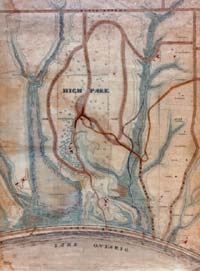
A map of High Park drawn by John George Howard in the 1870s.Source: Toronto Historical Collection
Later, the City of Toronto purchased more land in 1876 and 1930, expanding the park to its current size of 399 acres.
The Legend and Past of the Grenadier Pond
“Every Toronto child has heard this story: In the dead of winter in 1813, a troop of British grenadiers, fully armed, ventured onto this frozen lake to take a shortcut. Suddenly, the ice broke, and their heavy uniforms and equipment became their shackles, causing the entire troop to sink to the bottomless lake. Legend has it that on those quiet winter nights, you can still hear the dull thumping of boots coming from beneath the ice. Is this the origin of the name ‘Grenadiers’ Pond’?”
Historians don’t buy this claim. According to the Toronto Archives(City of Toronto Archives)According to records, the Battle of York in April 1813 took place in the spring, long after the ice had melted. Furthermore, there are no records of mass drownings in the official casualty lists.
So what is the truth? Let’s reconstruct this history.The Battle of York took place further east than High Park; all casualties are recorded, and no one fell into the pond. In fact, the name may have originated from a romantic Victorian era, as soldiers stationed in Toronto frequently frequented the pond for exercises or leisure, including some officers who came to fish at the invitation of the Howard family.
This is an advertisement published in the Globe on Saturday, April 17, 1880:
Grenadier Pond Sold
Then, Grenadier Pond, belonging to The Chapman family started ice harvesting in 1881.”In the days before refrigerators, Grenadier Pond was Toronto’s ‘natural refrigerator’.”The demand for ice is high. Besides supplying household freezers, ice is used for food transportation, beer brewing, and other commercial purposes. After it snows, they fill ponds with water to melt the snow into surface ice. Once the ice layer reaches a sufficient thickness for harvesting, they use horse-drawn ice plows to cut it into strips.
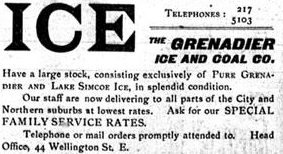
This is June 1, 1898.Advertisement published in the Post and Empire.source:TORONTOIST.COM
The Chapman family stored ice in an ice cellar on the bank of the pond. The ice cellar was made of wood and lined with sawdust for insulation, so the ice could be preserved until the summer. In the hot summer, the horses used to chisel ice in the winter were used to transport the ice to various places in the vicinity.
As the city developed, this place evolved into Toronto’s first outdoor social hub.
This photograph, taken in 1910, shows thousands of people gathered on the ice. There were no fences, no restrictions, only pure, natural freedom.
High Park’s legacy
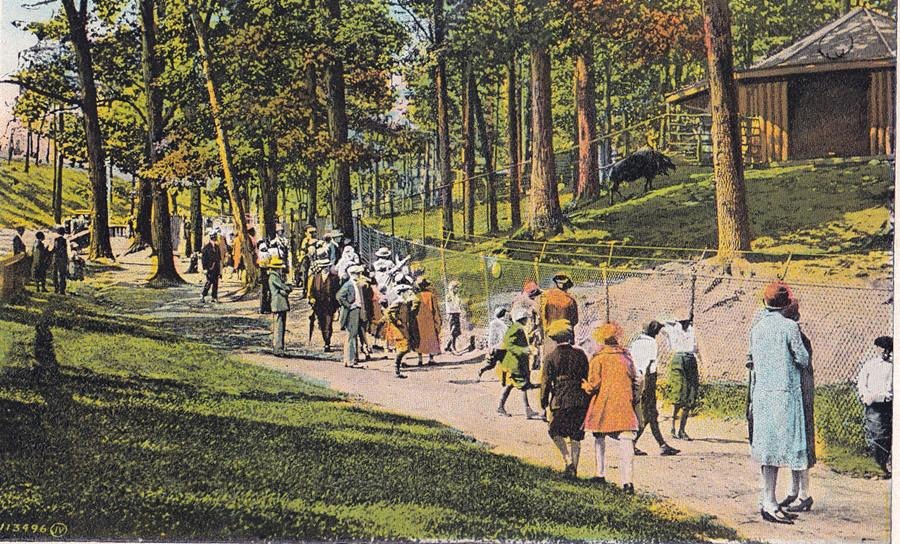
High Park Zoo Established in 1893, it is one of the oldest animal exhibits in Canada. From its original deer enclosure to today’s bison and llama enclosures, it is a cherished childhood memory for generations of Torontonians.
In 1959, Japan gifted 2,000 Yoshino cherry blossom trees to the citizens of Toronto.These cherry blossom trees were a gift from the citizens of Tokyo to express their gratitude to Toronto for accepting early Japanese-Canadian refugees who moved there after World War II. More than 50 cherry blossom trees were planted in the area overlooking the view. Grenadier Pond On the hillside.
In 1984, 20 cherry blossom trees were planted along a path on the west side of the children’s adventure playground. These cherry blossom trees were a gift and a “symbol of the joy of life”.
In 2001, another 34 Yoshino “Akebono” and Kanzan “Toyomanzo” cherry blossom trees were donated and planted near the Maple Leaf Garden. Grenadier Pond of East bank.
In 2006, 16 more Yoshino cherry trees were planted near the original planting site from 1959.。
Every spring, Toronto residents gather in the cherry blossom groves for a stroll, a testament to the most romantic historical connection.
High Park The Forest School was founded in 1913. Initially established for children with tuberculosis, it later became a summer school for impoverished and malnourished children. The concept of the open-air “forest school” stemmed from the belief that fresh air was essential for children, especially those vulnerable to tuberculosis. Later, these courses were used to improve the health of children whose physical development was delayed due to malnutrition, depression, or social difficulties.
Let weak children recover in nature. High Park has always been at the forefront of social concern.
In an effort to protect endangered black oak trees, Toronto has revived the Indigenous tradition of burning trees. It is in the Anishnabe language, Biinaakzigewok Anishnaabeg. It means “the responsibility and purifying fire of all indigenous peoples”.
This indicates that: Flames are not only destruction, but also rebirth.
The 200-year history of High Park proves that humans and nature can coexist.
So, how should each and every one of us write the next chapter of this land?
Let’s wait and see.
* The content, images, and videos in this article are taken from: City of Toronto Archives, High Park Nature, Toronto Railway Museum, Pexel, and others.