admin
admin 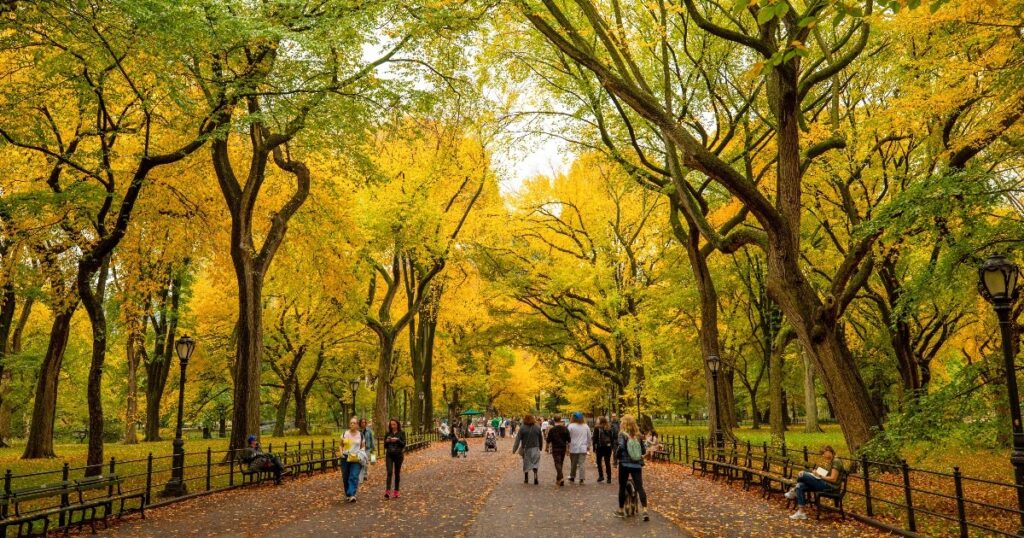
Prologue: The Secret at the Heart of Prosperity
Central Park, New York City’s 843-acre oasis, is hailed as “Manhattan’s backyard.” To the average tourist, it’s a gift of nature, a haven of tranquility for city dwellers seeking escape from the hustle and bustle. But to historians and urban planners, it’s one of the largest and most brutal public political experiments in modern history. Beneath the surface of this man-made earth, blasted rocks, and forcibly excavated lakes lie countless untold stories of land disputes, absurd pranks, the blood and tears of the first generation of freed Black people, ancient engineering relocations spanning millennia, the masterpieces of generous philanthropists, the passing of musical giants, and the landmark cases that profoundly reshaped the modern American judicial process. Today, we will strip away the veil of elaborate tourist promotional videos, using a rigorous historical timeline to guide you through two centuries of hidden archives and historical pain in Central Park.
Act I: Geopolitical Games and the Erased Community: The First Site Selection for Central Park and the Demise of “Seneca Village” (1850-1857)
1. The truth behind the initial site selection: The forced abandonment of “Joneswood”
In the mid-19th century, with the explosive growth of industrialization in the United States, densely populated metropolises like New York City needed places where people could connect closely with nature and find healing. Thus, calls arose to build a large park, modeled after existing parks in France and England.
In 1851, Ambros Kingsland, then mayor of New York City, formally submitted the site selection plan for the park—a 160-acre plot of land known as Jones’s Wood. Located on the banks of the East River and covered with dense old-growth forest, it was the preferred location for the park’s construction.
This proposal immediately sparked a fierce battle between Manhattan’s major real estate tycoons and political factions. Opponents vehemently criticized it, arguing that building the park on the remote East Riverbank was a shortsighted and selfish act; the park must be located at the very geometric center of Manhattan! Meanwhile, those fiercely defending private property rights…The old landlords along the East RiverThey also hired top lawyers and engaged in a protracted legal battle with the city government.
This battle over the “right to forcibly seize land” ultimately triggered a constitutional lawsuit.On July 21, 1853, the New York State legislature officially signed the bill, confirming that the park would also be located in the very center of Manhattan.That area was originally considered a ‘wasteland of rocks and swamps with no commercial development value’.Following the subsequent court ruling that the Donghe land expropriation case was unconstitutional…Jones Woodland was completely eliminated, and this area…778 acresThe central wasteland became New York’s undisputed destiny. This land is now the site of Central Park.
2. The Devastation of Seneca Village
But what the government and real estate developers call “wasteland” is actually home to 1,600 marginalized, lower-class New Yorkers. On this rocky land once stood Seneca, New York’s first affluent middle-class community founded by free Black people.
In 1825, 25-year-old Andrew Williams, an African American shoeshine man, spent his hard-earned $125 to buy the first three plots of land here. By 1855, the area had developed into a place with three churches, two schools, and…Approximately 225 peopleA sophisticated community of Black, Irish, and German immigrants. They lived side by side, had a high rate of land ownership, and even broke down deep-seated racial barriers of that era.
However, the bulldozers of urban expansion arrived with a roar. In an attempt to justify the forced relocation, media outlets such as the New York Daily Times launched a smear campaign on July 9, 1856, openly demonizing this respectable village with legal property rights as a “filthy shantytown ruled by pigs and goats.”
In 1857, the New York State Supreme Court issued a confirmation report, authorizing the government to forcibly exercise its “eminent domain” right. Because New York State election law at the time stipulated that Black men needed to own property worth at least $250 to be eligible to vote, this forced demolition not only deprived them of their property but also instantly erased the precious democratic rights of Manhattan’s voting elite. As for the poor renting, the compensation they received was a cold, hard zero.
By the end of 1857, the village of Seneca had been completely razed to the ground. In the long years that followed, their names were completely erased from the official history of Central Park.
Act Two: The Great Green Idea: Olmsted and Vaux’s Three Engagements and Three Forced Withdrawals (1857-1895)
1. A Collaboration of Geniuses: The Birth of the Greensward Plan
In 1857, the newly established Central Park Commission held the first open landscape design competition in American history to find the best solution. Of the 33 entries, design number 33, submitted at the last minute, stood out—this was the design jointly drawn by Olmsted and Vaux.Greensward PlanThe two designers’ vision for the park was revolutionary at the time. Vaux adhered to the philosophy of “nature first, architecture second,” while Olmsted firmly believed that “green spaces are the holy sanctuary of democracy for class equality.” They aimed to rebuild a pure English Romantic landscape on this ruin. To ensure that citizens could stroll without being disturbed by the noise of city traffic, they designed the ingenious “Sunken Transverse Roads,” concealing the four main thoroughfares that traversed the park below ground level; at the same time, they vertically separated the pedestrian walkways, carriageways, and bridle paths. This meant that no matter how bustling Manhattan became in the future, as soon as you stepped into the park, the surrounding steel and dust would completely disappear from your sight.
2. A thrilling three-stage entry and exit, culminating in a tragic departure.
However, the construction of Central Park became a breeding ground for political corruption in New York’s history. Olmsted and Vox, two men of high moral character, suffered brutal persecution from the infamous and corrupt Tammany Society for the next thirty years, and personally experienced the hardships of the park’s construction. “Three times in, three times out”—a tragic fate:
- One in and one out (1858-1863)In 1858, the two arrived at the construction site full of ambition as chief architect and consultant architect, respectively. However, they soon discovered that the committee was rife with political cronies, embezzling public funds, and forcibly altering blueprints. An enraged Olmsted refused to compromise and resigned in 1861 to participate in logistical and medical work for the Civil War. Vaux also resigned in 1863, unable to tolerate the bureaucracy.
- Two entries and two exits (1865-1870)In 1865, after the Civil War ended, the New York City government, facing strong public protests, was forced to reinstate the two masters to oversee the park’s full restoration. However, by 1870, Boss Tweed, New York’s notorious corrupt official, had seized control of the city’s finances. He forcibly dissolved the original committee and installed his own cronies. Olmsted and Vox refused to bow to Tweed’s corrupt politics and were both dismissed once again.
- Three terms in and out of the workforce and his eventual resignation (1871-1878)In late 1871, the Tweed corrupt group collapsed, and the two masters were invited back for the third time. However, by this time, the New York government had completely become a tool for exchanging favors. In 1878, in order to save money and install nepotism, the committee once again stripped Olmsted of his administrative authority. Disheartened, Olmsted published his famous final open letter, denouncing the New York politicians’ trampling of public art, and left New York forever for Boston.
Calvert Vaux, who remained in New York, met an even more tragic fate. On the foggy morning of November 19, 1895, this 71-year-old man, who had single-handedly persevered in protecting Central Park from commercial encroachment, mysteriously drowned while strolling along the Brooklyn River. Officially ruled an accident, his friends and family knew he had been utterly exhausted by the cold political struggles of the city, and had resolutely taken his own life. Alas! These two master architects ultimately could not find even a single day of peace in the green world they had created with their own hands.
Act Three: The Prank of the Great Escape from Central Park in 1874
This “Central Park Zoo Escape Hoax” can be described as…One of the most outrageous and successful absurd propaganda pranks in American news history.。
On Monday, November 9, 1874, the New York Herald, a major newspaper with a huge circulation in New York at the time, devoted an entire page to a breaking news story that was extremely detailed and vividly descriptive.:“A horrific disaster: Wild animals escape from Central Park! Manhattan descends into a bloody massacre!”(Awful Calamity: The Wild Animals Broken Loose from Central Park). The article vividly describes how an enraged rhinoceros smashed through its cage, killing its keeper, which then triggered a domino effect. Ferocious lions, hyenas, leopards, and tigers escaped one after another. “A Bengal tiger killed a nanny and a child on Fifth Avenue, a rhinoceros gored a keeper, and 49 wild animals were tearing apart citizens on the streets of Manhattan!” That entire morning, New York City was completely paralyzed—citizens stood guard at their doors with shotguns, shops closed, many public schools were forced to close, and police officers, with all their leave canceled, even fired shots at stray dogs in the streets.
The awkward situation of celebrities:It is said that the famous circus tycoon at the timeP.T. Barnum—This “master” who spent his life playing pranks and deceiving people with fake mermaids was terrified when he saw the newspaper early in the morning. He immediately grabbed his hunting rifle and rushed out of his house to protect his private exotic animal property in New York.
The incident stemmed from the fact that the makeshift zoo in Central Park (initially just a pet collection point donated by citizens) had long suffered from dilapidated cages and a lack of professional security, making it a potential hazard. The newspaper had repeatedly reported this issue, but to no avail. Therefore, Editor-in-Chief Connery gritted his teeth and decided to use a method that was extremely avant-garde at the time, even arguably a 19th-century version of a “fishing/social experiment”: since you won’t listen to advice, don’t blame me for scaring you to death! After receiving approval from his boss, James Gordon Bennett Jr., the scene described at the beginning unfolded. To avoid any criticism of the newspaper…The HeraldThe editors were fully prepared to deceive their readers. Anyone who read the article, titled “A Shocking Sabbath Death Frenzy,” would find the disclaimer cleverly hidden in the last few lines of the newspaper: “Of course, the above is entirely fictional. Not a single word is true.” “The worst disasters in history have often been caused by trivial reasons.”
Afterwards, some readers, eager for drama, said they particularly appreciated the last sentence: “Governor Dix shot a Bengal tiger in the street.” Can you imagine Governor Paterson doing that?
But competitors in the same cityThe New York TimesEnraged by this, they published several editorials criticizing the gimmick.The New York TimesThe article stated that this “not only violates the professional ethics of journalists and the respect due to the public, but also goes against basic moral principles.”
Interestingly, despite receiving a severe scolding, Connery ultimately achieved his goal. This scare spurred the New York City government and the Parks Commission to take the matter seriously, and they began allocating funds to reinforce the enclosures, thus putting the safety management of the Central Park Zoo on the right track.
Historical coincidences:More than half a century after this incident, in 1938, a replay of the event occurred—Orson Welles’s radio adaptation of *The War of the Worlds* was so realistic that Americans mistakenly believed Martians had actually landed on Earth. Chaos ensued, with people fleeing in panic. Welles, at a press conference the following morning, feigned extreme innocence and bewilderment. While the public was furious, Hollywood’s RKO Pictures immediately recognized the potential of this 23-year-old genius who could manipulate the entire nation, granting him an unprecedentedly privileged directing contract. Three years later, Welles directed what is considered the greatest film of all time—Citizen Kane。
(For those interested, you might want to take the time to learn more. It shows the comical scenes of panic and panic when people first learned that Martians were attacking Earth.)
Act IV: A Journey Through Time and Space: Cleopatra’s Obelisk (1880-1881)
In 1880, Central Park welcomed a…The Egyptian obelisk, also known as Cleopatra’s Needle.。This obelisk is over 3,500 years old.Weighing 220 tons and standing 21 meters tall, this Aswan red granite monolith is located behind the Metropolitan Museum of Art.It is the oldest man-made structure in Central Park to date. Around 1450 BC, this 71-foot-tall granite obelisk was carved from bedrock by the Egyptian Pharaoh Thutmose III. It stands alongside another obelisk guarding a temple in Heliopolis, near Cairo.Two hundred years later, the arrogant Ramses II had his name and title engraved on it.This obelisk and its sister obelisk stood in Heliopolis for 1,500 years, witnessing the rise and fall of more than a dozen pharaonic dynasties and countless foreign invasions.
Subsequently, Queen Cleopatra of Egypt (Reigned from 51 to 30 BCShe ordered the obelisks to be moved to Alexandria and erected on either side of the entrance to the temple built in memory of her deceased lover, Julius Caesar. However, before these ‘historical needles’ could be moved, the legendary queen tragically committed suicide under the relentless pressure of the Roman army. Fortunately, her grand plan was not abandoned and was finally completed in 12 BC by Caesar’s grand-nephew, Octavian Augustus, the first emperor of the Roman Empire. This is the only historical origin of their later misnomer as the ‘Cleopatra Obelisks’. To ensure the obelisks could stand firmly on their severely worn bases, the Roman emperor commissioned the creation of a set of four bronze crabs, each weighing 900 pounds, inscribed with the year 12 BC.
This obelisk’s sister monument, after surviving a perilous sea storm, finally arrived in England and was erected in London two years ago, in 1878.Victoria Embankment on the banks of the ThamesTo integrate this nearly 3,500-year-old ancient Egyptian artifact into London, the British cast two enormous statues on either side of its base.Bronze Sphinxes。
An amusing historical blunder: The British made a common-sense mistake when installing these two Sphinxes. Ancient Egyptian Sphinxes faced outwards, like “gatekeepers,” but the two Sphinxes in London were placed upside down. Now, they gaze affectionately at the central obelisk, the very obelisk they were supposed to protect.
At that time, the United States was catching up with Europe in terms of industrial production, wealth, and military strength. Many New Yorkers believed that an obelisk would help enhance the city’s image. Thus, Ismail Pasha, the Khedif (ruler) of Egypt, engaged in “obelisk diplomacy” to win over Western powers. After some skillful diplomatic maneuvering, a sister obelisk to the London obelisk was “gifted” to the United States. Following heated debate, it was finally decided to erect the obelisk on the grey hill behind the Metropolitan Museum of Art in Central Park (Grey Rock Hill). Railroad tycoon William Henry Vanderbilt provided sole funding, and the obelisk was officially opened.$103,732The check. In 1880, this was an astronomical sum (equivalent to millions of dollars today).
This was an enormous challenge for modern engineering. Engineer Henry Honeychurch Golling accomplished a remarkable feat, a true engineering marvel. He purchased an old Egyptian steamship named the SS Dessoug. To place the obelisk into the ship’s hold, he drilled a large hole in the bow. He used naval cannonballs as ball bearings to reduce friction—a clever invention that allowed the 220-ton behemoth to slide smoothly into the hold. While the transatlantic voyage took only 38 days, the short overland journey from the west side of Manhattan’s docks to Central Park took nearly five months. Because the obelisk was so heavy, the roads couldn’t support its weight, so workers had to lay temporary tracks and use steam winches to pull it, advancing only a few meters or tens of meters each day. As they crossed the pedestrian crossing in Central Park, they encountered an unusually fierce blizzard. But what was most frustrating was the then-prevalent “souvenir craze” among New Yorkers. During transport, if the obelisk were to stop even briefly, people would strike its edges with hammers at night, severely damaging the base and forcing the New York Police Department to deploy armed guards around the clock. It was in this way that the obelisk was preserved, preventing it from being smashed to pieces before reaching its base.
The original Roman-era crab sculpture supporting the worn corners of the obelisk is now in the Metropolitan Museum of Art. Four new crab sculptures were later created, each weighing approximately 900 pounds. In 1881, at the dedication ceremony of the Cleopatra Obelisk in Central Park, New York City, engineers and the New York City government secretly buried a “time capsule” beneath the obelisk’s massive base. This collection contains an extremely rich series of “time capsules.” People at the time hoped these artifacts would showcase the civilization, technology, and landscape of late 19th-century America to posterity.
(If you’re interested in the contents of this sealed lead capsule, you can look it up online; the contents will definitely surprise you. If that’s not amazing enough, look up the “time capsule” beneath the base of the Sister Monument in London; the British collection will surely blow your mind!)If you don’t believe me, I’ll eat my hat right here and now!” (If you don’t believe me, I’ll eat my hat!) )
Act V: The Miracle of the Arctic Dogs: Balto and the “The Game of Mercy” (1925)
In late 1925, a special animal statue was erected in Central Park to commemorate the heroic sled dog “Balto.” It witnessed the sled dogs’ miraculous race against time and escape from death. Today, children polish Balto’s head to a mirror-like finish. It was January 1925, when a deadly diphtheria epidemic broke out in the remote Alaskan town of Nome. At that time, Arctic blizzards raged, flights were grounded, ports were frozen, and the life-saving serum was 674 miles away. Under such extreme weather conditions, only dogs could accomplish this crucial task. Thus, 20 guides and more than 150 sled dogs were chosen to embark on a life-or-death relay race—”The Mercy Raid”—in temperatures plummeting to -50 degrees Celsius.This long, icy journey usually takes more than half a month to complete, but these animals ran day and night, ultimately conquering it in just 5 days and 7.5 hours (a total of 127.5 hours)! During this journey, the 12-year-old veteran dog “Togo” led the team through the ice crevasse, completing the most dangerous and longest 260-mile stretch; while the 3-year-old lead dog, Balto, guided the team instinctively even when visibility was completely obscured by blizzards. On the morning of February 2, 1925, Balto broke through the ice with its worn paws, delivering the serum intact to its destination. To commemorate the immense contribution of these human friends, a bronze statue the same size as it was erected on December 15 of the same year. Balto also attended the unveiling ceremony, witnessing the words “tenacity, loyalty, and wisdom” inscribed at its feet. This is not just a dog, but an eternal monument to selfless dedication and saving lives.
Due to space constraints, we will air the episodes on the philanthropists’ generous donations, terrorist attacks, the rebuilding of ruins, the assassination of the famous musician Lennon, and the wrongful conviction of the Central Park Five in the next episode.
📌 References:
NYPD Case #113353658746,1858 Greensward Plan Draft,Library of Congress Digital Archives,Dianne L. Durante: Central Park: Images through 1860,Obelisk, Central Park,/www.untappedcities.com/,www.centralparknyc.org/, Pexels, Pixabay and so on.
YouTube: New York Central Park (First half)