admin
admin 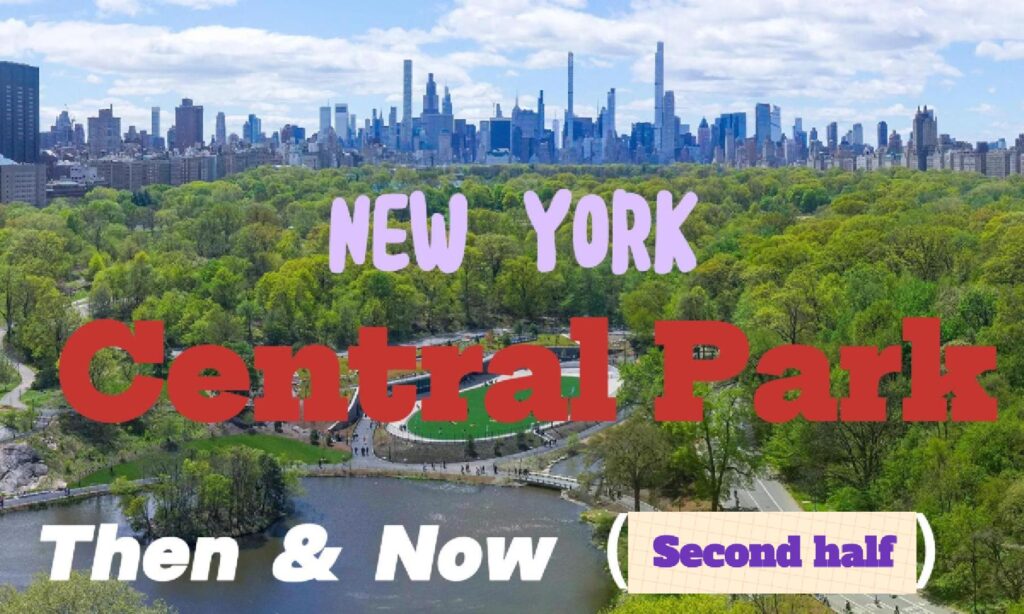
In the last episode, we talked about: the park’s location, its great designers, the disappearance of the First Freedom African American homeland, the absurd pranks at the zoo, the relocation of ancient Egyptian artifacts from thousands of years ago, and the story of the adorable rescue dog. Now, even more exciting stuff is coming!
Act VI: George Delacorte’s Artistic Romance: Fairy Tales, Theatres, Musical Clocks, and the Horrific Plot of 2020 (1959–2020)
1. A Bronze Fairy Tale Born of Sorrow: The Story Behind the Margarita Monument
In the mid-20th century, as Central Park struggled amidst political spoils and financial crisis, George Delacorte, founder of Dell Publishing and a publishing magnate in New York, decided to use his wealth to weave the most tender artistic dream for this cold city. His generosity stemmed from a heart-wrenching separation. In 1956, his beloved wife, Margarita, who had weathered many storms with him and built his publishing empire together, passed away after a long illness. The immense grief led the publishing mogul to decide to build an eternal ‘living monument’ to his late wife in the heart of Manhattan. He thought of the book his wife loved to read to her children by the Conservatory Water—Lewis Carroll’s *Alice’s Adventures in Wonderland*. George invested heavily, specifically commissioning the world-renowned Spanish-American sculptor José de Creeft to create the work. On May 7, 1959, this large bronze sculpture, standing 3.35 meters tall, was completed amidst cheers. The base bears a deeply affectionate inscription: “Margarita Delacorte Memorial”. Master José engraved a deeply personal sentiment within the bronze’s texture: Alice’s innocent and tender face was not a figment of imagination, but rather a meticulously crafted depiction based on the features of his own daughter, Donna Maria; while the comical, top-hat-wearing “Mad Hatter’s” features and facial contours are actually a realistic, satirical portrait of the donor, George Delacorte himself. Subsequently, Delacorte made a rule considered extremely unconventional at the time—the statue was open and unrestricted, explicitly welcoming children to climb and play on it. George once said, “I love watching the children climb up and down here on Sunday mornings; it brings me immense joy.” Over the past few decades, countless tiny hands and feet have worn the shoulders of the bronze Alice and the ears of the rabbit until they gleamed like gold.
2. Charity Drama and Dancing Music Clock
Delacorte’s artistic romanticism didn’t stop at fairy tales. In 1961, when he learned that theatrical master Joseph Papp was performing Shakespearean plays on a makeshift wooden stage for ordinary people on a lawn, he once again wrote a huge check. On June 18, 1962, the Delacorte Theatre, an ancient Roman-style open-air theater with 1,800 seats, officially opened, establishing an ironclad rule that remains to this day: all tickets are completely free, thoroughly breaking down the class barriers of high art. Then, on June 24, 1965, he brought to New York a medieval machine that he had been fascinated by during his travels in Europe—the Delacorte Musical Clock, which was put into operation above the red brick arch of the zoo. Every hour and half-hour, two bronze monkeys at the top would raise their hammers and strike the bronze bell. Immediately afterward, to the crisp sound of the bell, a whole bronze-cast ‘Polar and Jungle Symphony Orchestra’ would begin to magically rotate and dance around the clock tower on a conveyor belt. These six lifelike bronze mythical beasts each hold a musical instrument, showcasing their waltz that has never stopped for more than half a century:
- penguinHe was vigorously beating the big drum.
- brown bearThey were happily patting the tambourine.
- hippoPlaying the violin with deep emotion
- elephantSkillfully playing the accordion
- goatHead held high, playing the French horn
- And a kangaroo playing the French horn while holding its baby.
From the spectacle in 1965—when newspaper headlines captured crowds flocking to catch a glimpse of them—to the melodies that ring out in today’s digital age, these six animals have sung amidst the clamor of the “concrete jungle” for over half a century; with their timeless, childlike innocence, they gently remind hurrying New Yorkers to pause and savor this fleeting moment of tranquility and beauty.
3. 🚨 2020 Attempted Terrorist Plot: The Hollow Bomb That Torn a Fairy Tale Apart
However, this heartwarming scene, imbued with love and childlike innocence, nearly became a victim of a horrific and inhumane disaster in April 2020, more than sixty years later. At that time, the world was at a standstill due to the spread of the COVID-19 virus, and New York issued a historic lockdown order. The area around the once bustling Alice statue was deathly silent and deserted. This unprecedented desolation became the perfect cover for rampant evil.
April 9 to April 11, 2020,Kevin Fallon The 30-year-old Fallon, residing on New York’s Upper West Side, was a highly antisocial schizophrenic. On April 9th, Fallon suddenly sent a series of chilling threatening text messages to multiple friends and family members. According to the released court indictment, Fallon frantically shouted in the text messages: ‘I’m going to use a pipe bomb to blow up Alice, the Mad Hatter, and all the statues at their tea parties in Central Park! I’m going to destroy it all!’ On the morning of April 11th, Fallon’s actions escalated. He openly posted a highly realistic photo of a homemade improvised explosive device (IED) on social media—a tubular metal object with a digital watch attached, surrounded by multiple rifle bullets, accompanied by a blatant death ultimatum: ‘Look both ways before crossing the street. It’s going to hurt. None of you are safe. I am deadly.’ In addition to plotting to blow up the Alice statue, he also threatened to shoot his own father, ex-girlfriend, and all innocent passersby along the way.
This highly threatening terrorist attack immediately alarmed the joint regional fugitive task force of the New York City Police Department, the Intelligence Bureau, and the U.S. Marshals. Multiple SWAT teams and the Bomb Squad were dispatched to conduct a thorough raid on Fallon’s Upper West Side apartment on the afternoon of April 11. The results of the search left even seasoned crime-prone officers speechless: SWAT officers seized three fully assembled pipe bombs, a large quantity of rifle ammunition, and several highly lethal military bayonets bound together with black industrial tape. Fortunately, after emergency micro-X-ray dismantling by bomb disposal experts, the bombs were confirmed to be empty shells without a core explosive charge. Hours later, fully armed SWAT officers arrived at a hotel in Manhattan’s Theater District, broke down the door, and subdued the perpetrator who intended to shatter the childhood dreams of all New York City children. Final outcome: Fallon was formally charged in a New York court with multiple felonies, including “making a terrorist threat,” “second-degree illegal possession of a weapon,” and “aggravated harassment.” Given his severe history of mental illness, the court subsequently ruled that he would not be sentenced to death or imprisonment, but would be required to undergo mandatory, indefinite psychological evaluation and treatment in a high-security psychiatric hospital. This attempted, insane plot was swiftly nipped in the bud by the police just hours before its execution. It was precisely because of this dramatic interception that the bronze Alice statue, embodying the profound love between George and Margarita, was spared the fate of being shattered to pieces, and continues to protect the laughter of generations of children under the greenery of Manhattan.
Act VII: Ruins, Crime, and Rebirth: The Decay of Central Park in the Mid-20th Century (1960s-1980s)
1. A Demise of Hell: The Terrifying “Blade Park”
If we rewind to the mid-20th century, we witness the darkest and most shameful period of Central Park’s history. Beginning in the 1960s, as New York City plunged into a severe financial crisis and a manufacturing downturn, Central Park degenerated into a nightmare for the entire city. By 1970, with government funding completely cut off, the park’s maintenance staff dwindled from hundreds to a mere few dozen. Lawns became swamps, Sheepfield was piled high with garbage, Bethesda Fountain dried up and turned black due to clogged pipes, and building walls were covered in graffiti from various gangs. In media reports at the time, it wasn’t called Central Park, but “Blade Park.” It was the most dangerous public black hole in the United States, with the highest crime rate. Robbery, rape, and drug trafficking were rampant in broad daylight. At the time, the New York Police Department publicly warned citizens: “Do not enter Central Park after 4 p.m., or you will face the consequences.” The “democratic sanctuary” of equality championed by Olmsted and Vox, amidst the coldness of capital and the city’s bankruptcy, degenerated into a veritable hell on earth.
2. Rebirth: The Central Park Conservancy’s 1980 rescue operation
By 1980, ordinary citizens of New York could no longer tolerate the decay of their homes. A large number of enthusiastic citizens, environmentalists, and philanthropists joined forces to establish…Central Park ConservancyThis pioneering effort set a precedent for the most successful public-private partnership in American history. They raised hundreds of millions of dollars and spent ten years undertaking a comprehensive restoration project described as a radical overhaul. They removed graffiti that had persisted for 20 years, removed two thousand tons of garbage, dredged the five Great Lakes, and restored dried-up fountains. By the end of 1980, Olmsted and Vokes’ “Green Lawn Concept” had finally been revived from decades of crime-ridden ruins, revealing its true form to the citizens of New York City.
In 1987, during a major renovation project in Central Park, after numerous delays, real estate developer Donald Trump finally completed the renovation of Wollman Ice Rink.。
Act VIII: Gunshots in the Winter Night: The Assassination of John Lennon (December 1980)
History can sometimes be brutally cruel. Late on the night of December 8, 1980, a scene that shocked the world unfolded in front of the Dakota Apartments on the west side of Central Park. According to the official New York City Police Department records: at 10:51 p.m., John Lennon, having just finished recording, and his wife Yoko Ono entered the apartment building’s archway. Mark David Chapman, lying in wait in the shadows, fired five shots from six meters behind Lennon, four of them hitting him in the back and shoulder. Lennon staggered into the building’s lobby, shouting, “I’ve been shot!” before collapsing in a pool of blood. Chapman, remarkably calm, sat down by the roadside and began reading the novel *The Catcher in the Rye*. At 10:55 p.m., a patrol car, sirens blaring, drove against traffic to take Lennon to the hospital. At 11:00 p.m., surgeons at Roosevelt Hospital even opened his chest and manually compressed Lennon’s heart, but it was too late; they could not save this great life. The following day, December 9, 1980, the New York Daily News ran the headline “John Lennon Slain Herer” on its front page. The New York Times, on the other hand, wrote somberly on its front page: “For those who grew up in the 1960s, Mr. Lennon’s passing feels like the death of a part of their own youth.” This genius, who dedicated his life to advocating for “peace and love,” fell outside the gates of his favorite park, leaving behind a silent world.
John Lennon and Yoko Ono have lived on the west side of Central Park (72nd Street and Central Park West) in New York City since 1973.The Dakota ApartmentsThis historic apartment building has windows facing Central Park. Lennon loved Central Park; he often strolled there with Yoko, or sat on the grass seeking inspiration, and later even pushed his son in a stroller. Central Park became the rock star’s most cherished “spiritual sanctuary” in the bustling city of New York.
After his assassination,More than 100,000 heartbroken fans spontaneously flooded the lawn of Central Park, directly opposite the Dakota Apartments.They lit candles and sang “Imagine” in unison, a scene that became one of the most shocking and heartbreaking in New York history.
To commemorate Lennon, Yoko Ono later donated $1 million to work with the New York City Parks Department to redevelop the area across from Dakota’s apartment, the Central Park area where Lennon loved to stroll, into a 2.5-acre landscaped memorial area called “Strawberry Fields,” named after the Beatles’ classic song “Strawberry Fields Forever.”
- Imagine Mosaic:At the heart of “Strawberry Field” is a circular pattern made of black and white mosaic tiles, a gift from Neapolitan artisans, with the title of Lennon’s greatest single inscribed at its center.IMAGINE。
- Holy Land of Peace:Yoko Ono and representatives from around the world donated plants from all over the globe, transforming this place into an “International Peace Park.” To this day (including now in 2026), music fans from all over the world come here every day to place flowers, strawberries, or guitar picks on the mosaic discs, humming his songs.
For decades after Lennon’s death, Yoko Ono never moved; she continued to live in the penthouse room of the Dakota Apartments. Every year on Lennon’s death anniversary or birthday, Yoko would stand by her apartment window, silently gazing across the street at the “Strawberry Field” in Central Park, where fans gathered and candles were lit. Central Park not only witnessed their sweetest love story but also bore witness to her lifelong devotion.
The wondrous closed loop of history:Calvert Vaux defied public opinion in the 1850s to prevent commercial buildings from encroaching on every inch of Central Park; and a century later, it was this well-preserved land that allowed John Lennon to find a home in New York and ultimately gave pacifists around the world a “Strawberry Field” to mourn.
In 2007, Yoko Ono built the “Imagine Peace Tower” on Viðey Island off the coast of Reykjavik, Iceland, in memory of John Lennon.Imagine Peace Tower)。
- During the day, it appears as an extremely understated white marble base, resembling a wishing well. But at night, the base reveals…15 high-powered searchlights equipped with prisms and mirrorsThey will light up simultaneously, converging into a huge, vertically upward laser beam.
- On a clear night, this “laser needle” can shoot up to 4,000 meters (13,000 feet) into the sky, piercing through the clouds. If you’re on the coast of Reykjavik, you can clearly see this stunning blue light illuminating the night sky.
This light is not constantly on; its illumination time is highly ritualistic and subject to time restrictions.
- Watching over life and death:Every year on October 9th (John Lennon’s birthday), at 8 p.m., this light is turned on precisely; it will not be turned off until midnight on December 8th (the anniversary of Lennon’s assassination).
- Special holidays:In addition, it will only light up briefly for a few days on specific peaceful occasions, such as from the winter solstice to New Year’s Day, and the spring equinox (commemorating Lennon and Yoko’s 1969 honeymoon and the “In-Bed Peace Movement”).
The most touching part of this building is that, buried deep beneath the 10-meter-wide base of the wishing well, lies…More than 1 million peace wishes from around the world。
These wishes were collected by fans around the world and Yoko Ono through the “Wish Trees” project over the past few decades. The hopes for love and peace from people of different skin colors and languages around the world are now sealed in the soil of Iceland, transformed into the powerful beam of light that soars into the universe every day.
Around the marble base, the lyrics of the song Lennon shouted throughout his life are deeply engraved in 24 languages:“Imagine Peace”。
Act IX: Courtroom, Prejudice, and Justice: The Central Park Five’s Wrongful Conviction (1989–2014)
It was 1989. Cocaine was rampant, sweeping through New York City, and the poverty rate soared to 25%. Murders rose to 1,896 per year; 3,254 rapes were reported across the five boroughs. But only one case garnered sustained citywide attention and ultimately exposed biases within its criminal justice system and media outlets.
On the evening of April 19, 28-year-old white investment banker Trisha Meili was attacked while jogging in a dilapidated area north of Central Park. She was struck with stones, gagged, tied up, and raped. Her body was left in the wilderness and was not discovered for several hours, by which time she was unconscious, suffering from hypothermia and severe brain damage.
That night, more than 30 teenagers entered Central Park from East Harlem. Some of them began to act recklessly, throwing rocks at cars and assaulting and robbing passersby. Following the incident, police quickly arrested six people, including 14-year-old Salaam, Raymond Santana, and Kevin Richardson; 15-year-old Antron McCray; and 16-year-old Corey Wise. Five of these teenagers—four African Americans and one Latino—were later known as the “Central Park Five.” Under more than seven hours of unmonitored police interrogation, four boys signed plea agreements.
The city was in an uproar. The case not only reflected the fear stemming from New York’s rapidly rising violent crime rate but also people’s anxieties about the city’s racial issues. Around the same time, a 28-year-old Black woman in Brooklyn was raped and subsequently thrown from the fourth floor by two men, sustaining serious injuries. However, this incident did not receive widespread media attention.
Just two weeks after the Central Park attack, with the boy yet to be tried and Meili still in a coma and absent from court, Donald Trump intervened. (Trump’s office is located on Fifth Avenue, overlooking the park’s southern boundary.) He reportedly spent $85,000 on ads in four New York City newspapers, including The New York Times. Titled “Bring Back the Death Penalty. Bring Back Our Police!”, Trump wrote above his signature: “I hate these robbers and murderers. They should be punished, and if they kill, they should be executed. They must serve as a negative example so that they will think twice before committing crimes or acts of violence.”
The following year, during their trial, all five boys recanted their confessions and refused to plead guilty. They claimed their previous statements were made under duress during a police raid and lengthy interrogation, after which they were forced to admit to crimes such as rape.
The prosecution’s charges relied almost entirely on their statements made shortly after the incident. This proved crucial: no DNA evidence linked them to DNA found at the crime scene. Meanwhile, Mary, who miraculously recovered and testified in court, had no memory of any details of the attack.
In court, all 12 members of the jury found all five boys guilty. The court handed down the maximum sentences, five to ten years and five to fifteen years respectively. Wise remained incarcerated at the infamous Rikers Island prison because he was sentenced as an adult.
Later, Michael Warren, a veteran New York civil rights lawyer who later became the defense attorney for the “Central Park Five,” became convinced that Trump’s ads played a role in securing a conviction. Warren said, “His preconceived notions influenced the stance of many New Yorkers. At the same time, he cleverly exploited people’s natural sympathy for the underdog. Although the jurors claimed they were able to remain impartial, some of them, or their families, were certainly influenced by the inflammatory rhetoric in the ads.”
In 2002, Matthias Reyes was sentenced to life imprisonment for a series of violent rapes and murders.Matias Reyes),While serving his sentence in prison, he had a second chance encounter with Korey Wise, one of the “Group of Five” members who had been wrongly convicted years earlier. Overwhelmed with remorse, he confessed to the police that he was the sole perpetrator in the 1989 Central Park joggers case. Re-testing of DNA confirmed that the semen found on Meili’s body was indeed his.
On Christmas Eve of the same year, the New York State Supreme Court overturned the convictions of all members of the Central Park Five. However, this could not change the fact that the fates of these five young people had been completely rewritten. After 14 years of court proceedings, the Central Park Five reached a settlement with the New York City government in 2014, receiving $41 million in damages.
Subsequently, the entrance and exit through which the teenagers entered the park at the time of the incident was named “Gate of the Exonerated”.This is the only officially named gate added to Central Park in over 160 years since 1862.It is not only to remind the world of the judicial scandal that targeted five teenagers, but also to pay the deepest tribute to all the innocent people in the United States who have suffered systemic judicial injustice, been wrongfully detained and then exonerated.
Epilogue: A Look Back at Time Amidst the Noise
After nearly two centuries of bloodshed, miracles, lies, ruins, and eventual redress, Central Park still quietly welcomes every visitor. As the film concludes, let us turn our attention back to this vast oasis: People will not forget the demolished Seneca village deeds, the indignant departures of Olmsted and Vox during the political spoils, the extreme feat of moving the obelisk with cannonballs, the 127.5-hour miracle of life in the snow, George Delacort’s generous donation and the children’s laughter, the cold timeline of the Lennon case report, and most importantly, the Central Park Five’s reclaiming of their innocence through the “Gate of the Exonerated.” The devastation of the mid-20th century could not destroy it, and the fervor and clamor of the 21st century will eventually fade away. Central Park is not only Manhattan’s “backyard,” but also a historical epic bound together by bricks, silt, tears, and glory. When you stroll through this lush, tree-lined “Shangri-La” again, take a moment to pause and listen carefully—for every rock and every dusty page of the archives tells you the most authentic legend of this city.
Youtube: New York Central Park (Second half)
New York Central Park (First half)